Check Out Our Financial Aid Tools

College Admissions
College Admissions
Preparing for College
The Best College for You
What to Study
Applications
Education Options
Education Options
Private Universities
Public & State Universities
Community Colleges
Scholarships
Scholarships
African American Scholarships
Latino Scholarships
Native American Scholarships
Women Scholarships
College Grants
College Grants
Federal Grants
Merit Based Grants
Need Based Grants
Student Loans
Student Loans
Federal Student Loans
State Student Loans
No Co-signer Student Loans
Bad Credit Loans
Student Loan Consolidation
College Survival
College Survival
Financial Aid Tips
The Digital Student Blog
According to University of North Texas professor Jennifer Acker
marriage is very easy to get into. In fact in her home state one only needs a driver’s license to apply for a marriage license (could someone connect those dots for us?).
But, Professor Acker notes, marriage is not so easy to escape.
“Divorce ranks number two on the list of most stressful life events (with number one being the death of a spouse),” she explains. “Rarely do people walk away from divorce completely unscathed.”
Believing that if couples were better prepared for marriage fewer would seek divorce, Acker teaches one of the more unique courses to be offered on a college campus: Romantic Relationships: Theories, Research and Application. In simplest terms, it is a class that is designed to teach young people about love and romance.
 And while the traditionalists may be cringing at the fact that students may actually earn three credits towards their college diploma discussing such a topic, we do understand that today’s fast paced and stressful life is much easier to handle if one is able to share their life as part of a successful relationship.
Legitimate Academic Study?
The description from the course catalog:
4343. Romantic Relationships: Theories, Research and Application. 3 hours. An in-depth, comprehensive exploration of the theories, research and applications thought to promote relationship success in a wide variety of romantic relationships, including dating and marital relationships.
Professor Acker offers her Romantic Relationships senior level course to a growing number of students each year. About half of the 60 students enrolled this year are taking the class as part of the Development and Family Studies program in the College of Education.
But the other half apparently spans a wide variety of majors, with each student offering a variety of personal reasons for taking a course that seeks to help students understand what constitutes a healthy romantic relationship.
Professor Acker, a self-proclaimed Star Wars fan, told the Dallas Morning News that her course at the college in Denton focuses on educating students in areas such as dating, attraction and friendship. Even more importantly, she insists it does so outside of those traditional keg parties or casual hook-ups.
As one might expect, recent news reports did little to enhance the course as legitimate academic inquiry. Instead, newspaper accounts highlighted the class as part of its Valentine’s Day reporting.
So the focus was on the real way to tell if he loves you (it’s not in his kiss – it’s in his eyes) and that the relevant info was being delivered by the students “Love Lecturer” who guided the students through the “twists and turns of Cupid’s arrow.”

Pertinent Nonetheless
While so much of the reporting focus was on the famous men and women the students found attractive, from James Franco to Carrie Underwood, it was nice to hear some intelligent individuals focus in on the real substance of the course.
One such senior, Zuleyma Rogel, who just so happens to be pursuing a double major in social science and political science, told the Dallas News that “she has noticed a strong shift in marriage dynamics as more women have pursued careers outside the home.” The paper went on to note:
Rogel says that academics and a good career are important to her, but that she believes that true success in life will come from becoming a wife and a mother, so she wants to learn how to balance those two segments of life.
While many reveal that they are taking the class to fulfill requirements for their majors, another group believes that the course will help them in their future careers as counselors. Professor Acker also insisted that college was a particularly good time to learn about creating healthy partnerships.
And as for the demise of the American family, Acker believes a good portion comes from today’s hectic lifestyles.
“I think people become so engrossed in their busy lives and day to day activities that they forget to make time for one another, explains Acker. “They either rarely communicate or do so ineffectively and with an undertone of stress. This lack of communication just compounds any issues that may already be present.”
Of course, as we noted the class has its critics. There are those that insist the course is precisely what is wrong with higher education in America, that the class is neither “a legitimate academic pursuit nor a useful intellectual exercise.”
Those naysayers certainly have not gotten the attention of a student body that is lining up in droves to learn how to make a relationship work. And given the clear importance of two parent households for children, a course that seeks to help young people establish long lasting relationships just might be the most important one a student takes while in school.
The ability to learn from one’s mistakes is an art form. In fact, learning what not to do may just well be the single most critical step for success in life.
So it goes without saying that one of most valuable presentations for young workers would be one that focuses on the things one should never do. And if such recommendations could be presented with some very edgy humor, you could wind up with an award-winning bit that earns you countless speaking engagements.

Such is the unique emphasis of corporate keynote speaker and stand-up comedian Jeff Havens. Jeff is a Phi Beta Kappa graduate of Vanderbilt University – and former English teacher who honed his presenting and comedy skills the tough way, trying to get today’s digitally-oriented 9th and 10th graders reading Shakespeare and Homer.
While education may not have been his calling, his desire to teach has never waned. Hence he now engages corporate audiences, folks like General Electric, McDonald’s, Ford Motor Company, USBank, and Frito-Lay with his mantra, Uncrapify Your Life!, a bit where he encourages workers to “criticize others and outsource blame.” By first “highlighting and poking fun of the practices we’re all guilty of,” Uncrapify Your Life! provides a major “twist on the traditional motivational model.”
In addition, Jeff also offers another established keynote that is relevant to those new to or just about to enter the workforce. In his second bit, he offers some very powerful lessons on How to Get Fired!, deep meaningful lessons that will ensure your ability to get canned in even an up economy.
We caught up with Jeff over the weekend. The first time he was on his way from Madison to Omaha, the next time on his way back to Madison and just before heading off to St. Cloud. For the popular speaker that is just the tip of the iceberg for a month of February that will see him addressing audiences in Boston; Schenectady, New York; Savannah, Georgia; Kansas City, Missouri; and multiple cities in Illinois and Indiana.
It appears that public speaking and a humorous approach to serious topics runs in the family. My understanding is that your Dad Rex is also a comedian/motivational speaker?
Yep. He started out as a corporate lawyer – not a fact he advertises, since most people don’t think lawyers are the most hilarious group of people – but he got into comedy late, at 37, and seven years later quit law and went full-time at the comedy world. And he’s done it, he’s made a living – a pretty decent one, to be honest – as a completely invisible comedian. Corporate shows, cruise ships, etc.
There are a ton of us, invisible entertainers – comedians, magicians, jugglers, hypnotists, probably a few mimes in there – paying our bills when nobody knows who we are. Check him out – Rex Havens – if you’ve ever been married, thought about being married, or heard about somebody getting married, then you’ll love what he does with relationships.
Like when it comes to weddings, a woman’s clothes are folded, sealed, wrapped in plastic, saved and preserved as an altar and shrine for life. The man’s clothes are rented…and need to be back at the shop by Monday…because another guy needs ’em next weekend.
Anyway, when I decided to try my own hand at comedy – which has morphed into the content-oriented comedic presentations that I now do regularly for corporations and college students alike – anyway, when I decided to try it, I didn’t get into it because of him. But once I decided that I might want to pursue comedy as a career, he was a phenomenal role model. He taught me that this is a business, that you don’t just go to a club and shout into a microphone for your own entertainment. It’s a job, you have to be professional, you have to prepare and work and work and work. And I think that’s really helped me move up much faster than I would have otherwise.
Yet you chose at first to teach? High school English no less?
Ah, yes. High school English. Kids today just LOVE reading, by the way, which is why I’m no longer teaching. I taught 9th and 10th grade English – Romeo and Juliet, The Odyssey, all those ancient stories that so resonate with today’s cyber youth.
But to be honest, teaching is incredible. The good days are unbeatable – you really know that you’re making an honest difference, changing the world in some positive way – but the bad days are horrible. High highs, low lows.
 I liked teaching, but I didn’t like where I was. There was no parental support – for example, at my first parent-teacher conference of my 2nd year of teaching, 6 of my 120 students’ parents showed up. And ultimately, I was young, and not a terribly good teacher probably, and I couldn’t get my students to meet me halfway. A lot of them thought I was really fun – I brought my drums in one day for example to teach about the difference between rhyming and free verse poetry, and I dyed my hair pink as a reward for one of the girls in my class who had collected a certain amount of extra credit. But they just wouldn’t read. And I didn’t want to be pushing grammar worksheets for the rest of my life.
I will say this, though – there is absolutely no better preparation for public speaking of any kind than being a teacher. Every day, you are presenting to five or six audiences, some of whom are actively disinterested in or contemptuous of what you’re trying to say. After that, no comedy audience can touch you. I’ve had my share of less-than-stellar performances in my six years as a comedian, corporate speaker, and lecturer, but I’ve only had one that I’d consider truly awful.
Teaching gave me an enormous amount of confidence in my ability to handle stress in a public setting, and I think it’s paid itself off very nicely.
OK, let’s get to some brass tacks here – were you a little tongue-in-cheek in your book, that you have been fired from more jobs than our readers will likely ever have? And the longest job you ever held lasted exactly 43 days?
Honestly? Yes. I’ve never been fired. Although I have failed to get hired before, which you could consider to be a sort of premature firing. I’m guessing they knew that I’d eventually get fired, so they saved themselves the trouble of hiring me, being disappointed, and having to let me go.
Oh, wait. Yes, I have been fired once. For about 18 months I made a portion of my living on the streets of Nashville playing drums dressed up like a giant chicken. I bought a chicken suit on eBay for $100 – my first eBay purchase, by the way, and the best. You make a lot more money playing drums on the street dressed up like a giant chicken than you do dressed like a normal person. Anyway, one of the bars on 2nd Avenue in downtown Nashville started paying me to stand in front of their bar and attract business, which I did all through winter and spring until it got too hot in the summer – three or four hours of drumming on a street in a latex-lined chicken suit is hot enough in December, much less July. Anyway, when I came back the next fall, they didn’t feel like paying me anymore. Was I fired? Maybe not technically, but it felt like it. And the chicken drumming was just never the same.
And are you still really living in the family basement “feasting on box macaroni” at any moment you so please?
I love box macaroni. But no, I have my own house, with my own yard, and a lawn tractor because I’m 95 years old, and occasionally my wife and I stand in Home Depot and shop for houseplants. But every so often I will go into my own basement and eat box macaroni. Does that count?
The year 2010 will bring with it your first appearance on Comedy Central? Can you give readers a glimpse into the stand up routine you will be delivering?
 Sure. I still have a regular stand-up routine – I don’t do it as often anymore, mostly because I’ve been keeping so busy with Uncrapify Your Life! and How to Get Fired! – but my comedy routine is generally conceptual.
I deal mostly in ideas. Health care, education, how math can help you get into Heaven, language. I like playing with words, looking at the various absurdities of some of our everyday phrases and idioms.
Oh, and I’ve definitely got the best way to entertain yourself at the post office that I’ve ever heard of.
When listening to and reading about your award-winning, Uncrapify Your Life! keynote address, I couldn’t help but think of our good friends in Washington. Particularly when it comes to the notion of criticizing others and outsourcing blame!
I think the reason Uncrapify has been as successful as it has been is because people appreciate the fact that I’m calling all of us out. We’re all guilty of masking our criticism of others in seemingly innocuous phrases like “No offense” and “Don’t take this the wrong way,” and everyone is guilty of finding a scapegoat from time to time.
When it comes to my corporate audiences, I like to point out the things we’re all guilty of, have some fun with it, allow people to laugh at themselves, and then bring it back to something meaningful they can do to hopefully improve some tensions that have built up in their working environments.
But if we’re talking straight politics here, I’m extremely disappointed in our leaders’ collective inability to get anything significant done. I’m aware that Republicans and Democrats often work together on small issues, local affairs and things like that. But if it’s going to take 60 Senate votes for any major legislation to get passed, then absolutely nothing is going to happen. Everyone will blame everyone else, and things will only get worse. And I think it’s safe to say that most Americans would agree that that is not leadership.
While I can see the reverse psychology working for the members of the corporate world and with some work experience, I had wondered how it might come across to college students, that we might still be a little too narcissistic to really get it. But apparently I am wrong?
It’s been really interesting seeing how How to Get Fired! has evolved. Because to be perfectly honest, from a comedic standpoint college students are not the ideal audience for this presentation. As you point out, they have very limited experience in the working world, so there’s an extent to which they can’t fully appreciate the reality of some of the things I’m ‘encouraging’ them to do. I’ve had plenty of older audience members watch How to Get Fired!, and they absolutely love it – they’ve seen the behaviors I’m describing, they know people who have been fired for doing the things I’m talking about, and it’s a very rich experience for them.
 With college students, it’s all a little abstract. But that said, they’re still laughing. Good comedy will win out. But what’s really interesting is that when I get to the end, when I drop the satire and start talking more seriously about the things they need to prepare for as they move from college into the working world, they really perk up. Right at the point where I would expect them to start tuning me out and playing with their phones, they sit forward, they listen, they’re engaged in a way that has really pleasantly surprised me. They want to be ready for the rest of their lives, and I think they can sense that I’m there to help, that I want them to be as successful as possible.
They might not understand all these ways to get fired on the deepest possible level, but I have to be comfortable with the fact that they will soon. It’s just like teaching, really – you don’t have students thank you for changing their lives until they’ve left you behind for a few years and had a chance to process what you did for them.
I think How to Get Fired! will function a little like that with some of my audience members. Again, everyone enjoys it in the moment – it’s been really successful. But I think there will a come a point for a lot of my college audiences a few months after they graduate when they say, “Oh, NOW I get it.”
In How to Get Fired!, you offer the Four Pillars of Poverty? Can you briefly introduce our readers to these Four Pillars? And is anyone of these a surer road to dismissal over all others?
Sure. The Four Pillars of Poverty, arranged more or less in order, are: Fake Your Resume, Establish Your Incompetence, Destroy Your Work Ethic, and Alienate Your Coworkers. Collectively, those four will guarantee that you never hold a stable job anywhere.
But if you want to shortcut your way to the unemployment line, I recommend focusing on destroying your work ethic. Which should be the easiest thing in the world, by the way, since college pretty much takes care of that for you.
In college you wake up when you want, go to class when you want if you want, choose the classes you take and drop the boring ones (or the ones that you’re in danger of failing), study when you want if you want, get drunk on Tuesday night whenever the mood strikes. Treat your job like college, and you’ll have no trouble getting fired.
And while destroying your work ethic is the best single fix, one of the more entertaining is the last one, alienating your coworkers. Why? Because it’s the only one of the Four Pillars of Poverty that can lead to you being burned in effigy, an honor usually reserved for traitors and deposed leaders. And there’s nothing quite as special as seeing a stuffed scarecrow with a picture of your face being attacked by an angry mob as you’re being escorted from your office by security.
While your focus is on humor and what not to do, my understanding it that when you are presenting you do bring the message full circle, offering some serious advice. Can you share with our soon-to-be graduates a couple of key pointers regarding the transition to the work world, particularly in these challenging economic times?
Absolutely – and yes, How to Get Fired! ends with a more serious discussion on various ways that students can succeed not only in getting a job but also in keeping one. I guess the two points I’d emphasize are these: you can’t treat your job the way that college allows you to treat your classes. The biggest single complaint that employers have about recent college graduates is that many do not seem to be willing to put in the time necessary to move themselves into those upper-level positions that just about every college graduate thinks they’re automatically entitled to. In college, you can put down a book if it’s boring, you can skip a test if you feel like sleeping. You can’t do that at your job.
 And the second thing to know: get ready to work. We’ve become a very pampered and self-absorbed country, and most of us expect things to always be fun or we don’t want to do them. But you have to understand that unless you’re related to the person who hires you, you’re not going to start at the top. Because no matter how much merit you think you have – or actually have – you can’t prove that without some experience behind you. It’s a climb, it’s going to take time, especially if you go into business for yourself. It’s no different than learning an instrument or a sport.
There’s a lot more in the lecture, and there’s even more in the book, How to Get Fired!: The New Employee’s Guide to Perpetual Unemployment. Advance copies of the book are available now on my website. Also, any school that hires me for the How to Get Fired! lecture gets 50 copies of the book along with it.
The book will also be in bookstores everywhere on April 1. Just in time for graduation. Not to be too self-promoting, but I think it’s a really funny book, and I swear you’ll get something out of it that you can use to help prepare for this weird working thing they make all of us do.
Marketing is critical to any business. Colleges and universities are no different.
Each year we are witness to some interesting efforts. For example, last year we were exposed to Harvard by the Numbers:
But in today’s YouTube, mash up world, such marketing videos are ripe
for alteration. No sooner had we been exposed to Harvard by the Numbers, we got this superb parody:
Now comes the latest from the talented students at Yale University. For a generation smitten by the likes of High School Musical and Glee, it may well be the perfect marketing tool:
While we await the parody that will certainly be forthcoming (though we doubt it will attempt to match the length), it is interesting to see the current reactions making their way around the web.
For many current Yalies, it is, well ‘cringeworthy’.
“Next year’s class is going to be devoid of any serious academic talent,” offers ugh. “What a huge sap on our prestige.”
“This is so embarrassing,” adds whoa while another commenter called Crimson went on to suggest, “This is the best recruiting ploy Harvard ever came up with!”
It gets no better among the college elite. In “That’s Why I Chose” to Ram a Soldering Iron Into My Ears, Bobby Fineman of Ivygate lets loose:
“Oh. my. god. Yale has released a new admissions video called “Why I Chose Yale,” and it is bananas! Rotting, blighted bananas made of earnest on-key singing and poop.”
Ouch.
Zachary Warma at Stanford calls his piece, Hell Hath No Fury Like That of a 16.5-Minute Yale Admissions YouTube Music Video:
“Yale Admissions Office put together what can only be called one of the single greatest abominations ever to hit the intrawebs ……It is unknown whether the worst part is the elitist self-righteousness put into song …….in this incendiary affront to higher education.”
Ouch.
And the ever popular Gawker insists that “one of the Western world’s most prestigious universities has decided to roll out a sixteen minute and forty-nine second-long info movie, much of which involves current students warbling and dancing awkwardly, as most Ivy League dorks are wont to do. No one can ever agree on art. But what we can all agree on is: NERDS!!!!”
The popular site adds this comment from an Eli: “the film’s obsessive coverage of Yale’s social opportunities perfectly reflects the student body’s general trend of trading intellectual vigor for inebriate juvenility.”
Double ouch.
But while many are holding their collective noses, Tweed at the Chronicle blog almost gushes:
“When colleges try to appeal to prospective students through advertisements, they must walk a fine line between legitimate promotion and schmaltzy marketing that opens the way for genius satire.
“With its campy new admissions musical, ‘That’s Why I Chose Yale,’ Yale University proves you really can have it both ways. The video, a song-and-dance sketch that is clearly aimed at the generation weaned on High School Musical, simultaneously winks at its audience while feeding it images of successful, ebullient Elis romping across the campus like the cast of ‘Up With People’.”
Tweed is not alone with praise though Christopher Shea at Brainiac is more reserved and offers simply, “I think it works.” He even titles his little reference, “Yale plays dirty in the college-recruitment game” though he does wonder aloud who did the voice-over for those Yale professors.
What say you our faithful readers – good marketing??
Or??
Each year the Rhodes Trust selects an elite group of American students to represent the United States. These Rhodes Scholarships, “the oldest and best known award for international study,” are likely “the most famous academic award available to American college graduates.”
Chosen in a two-stage process, candidates must first be endorsed by their college or university. Committees of Selection in each of 16 U.S. districts review the applications and then invite the strongest candidates to appear before them for an interview. Selection for the interview is based upon high academic achievement, integrity of character, a spirit of unselfishness, respect for others, potential for leadership, and physical vigor.
 This year, from 805 endorsed students, 216 applicants reached the final stage of the competition before the committee chose the 32 Rhodes Scholars recipients.
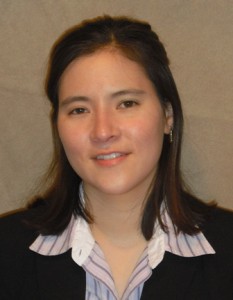
Today we give readers a chance to hear from one of the recipients for 2009, Caroline Huang of the Massachusetts Institute of Technology. As with the other Rhodes Scholars selected, Caroline is first and foremost an exceptional student.
A Brain and Cognitive Sciences major and sporting minors in psychology and political science, Caroline is interested in careers involving either health policy or psychology. At Oxford, her doctoral work will examine the ethical and policy implications of specific gene mutations that are linked to increased risk of specific cancers. Caroline wants to research how clinicians can help patients make individualized decisions about genetic testing and the necessary support mechanisms that should be put into place for people who have had or are considering genetic testing.
But in addition to her academic stature, Caroline is the founder of Camp Kesem at MIT, a free, week-long summer camp for kids whose parents have or have had cancer. Having been affected by the destructive power of cancer herself, Caroline epitomizes the Rhodes, spirit of unselfishness, criteria.
Read on to learn about this remarkable young lady, her work with Camp Kesem, her unique club imperfect@MIT, and what it felt like when she learned she had been selected for this prestigious award. When you are done, we are sure you will understand why Caroline was one of the 32 students selected to represent the United States.
As the valedictorian of your high school, you clearly had a lot of options regarding higher education. Can you explain the decision-making process you used to select MIT?
I applied early action to MIT and was fortunate to be accepted in December, which eased the college admissions process considerably. MIT appealed to me because of its hands-on undergraduate research opportunities, the interdisciplinary nature of the Brain and Cognitive Sciences program, and the wide variety of extracurricular projects in which students participated. (For a few examples, I’m helping to teach a trufflemaking class for the Laboratory for Chocolate Science this January, and I became a certified Emergency Medical Technician-Basic through MIT’s student-run ambulance service.)
Additionally, I grew up visiting and enjoying Boston – my mom grew up in North Easton, Mass., and my dad received his S.B., M.Sc., and Ph.D. degrees from MIT, so I loved the idea of being able to explore Boston for four years. Lastly, I’m a huge Boston sports fan, so the idea of attending games and watching the New England Sports Network on a fairly regular basis was exciting.
The other colleges I seriously considered were Duke and Boston University, both of which would have been great choices. In the end, MIT seemed like a better fit.
One of your greatest accomplishments has to be the creation of Camp Kesem MIT. For our readers who are unaware of this nationally affiliated organization, can you explain what Camp Kesem is all about?
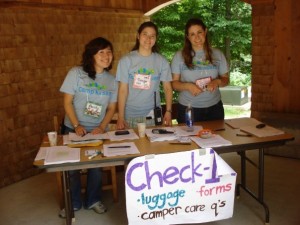 Camp Kesem provides a free, week-long summer camp for kids whose parents have or have had cancer. “Kesem” is the Hebrew word for magic; our goal at Camp Kesem is to provide these children with a magical week that allows them to escape the harsh realities of cancer.
Campers participate in normal camp activities such as swimming, arts and crafts, and sports; what makes Camp Kesem special is that during these activities, campers realize they are surrounded by other children in the same situation. Through love, laughter, and support, Camp Kesem helps campers to share each other’s strength and realize that they are not alone.
The other half of the Camp Kesem mission is to empower student leaders. In the process of organizing Camp Kesem, college students serving as volunteer organizers and counselors gain hands-on experience in running a nonprofit out of their dormitory rooms. The students involved are all part of a tight-knit community and help out when other counselors have family crises, schoolwork difficulties, and more. Best of all, student volunteers who invest their time and energy into Camp Kesem are able to see a positive, tangible difference in the campers in just one week.
My understanding is that your desire to start a branch of Kesem at MIT was somewhat personal. Can you talk a little bit about the impact of cancer on your life?
When I was 13 years old, my paternal grandmother died of colon cancer; almost exactly one year later, my paternal grandfather died of prostate cancer. As a teenager, it was hard to make sense of so much loss in such a short period of time and to come to terms with the idea that Grandma and Grandpa wouldn’t be able to attend my tennis matches or high school graduation.
When I visited Duke during my junior year of high school and heard about their campus branch of Camp Kesem, I knew that I wanted to be involved with the program. It combined two things that mean a great deal to me: summer camp, which I had attended since the age of five, and families affected by cancer. Once I knew I wouldn’t be attending Duke, I called up Camp Kesem National and asked if it would be possible to start a campus branch at MIT. Luckily, Camp Kesem National said yes.
Creating an MIT-affiliated camp had to consist of some incredibly hard work. Did you raise the funds for the program? If so, can you explain the process you used?
 Fundraising has been, and probably always will be, the most difficult and time-consuming aspect of organizing Camp Kesem. Because of the financial burdens that cancer places on families, we offer it completely free of charge – which means that for Camp Kesem 2010, our target is to raise $55,000.
Our primary methods of fundraising are writing grants and soliciting personal donations; we also run mini-events throughout the year (e.g. bake sales, Valentine’s Day candy-grams, and care packages). In the past year, we’ve also added a few larger-scale events, such as an informational brunch called “Make the Magic” that combines student, camper, and parent perspectives on Camp Kesem’s impact. Corporate matching programs and community partnerships have supplemented our funds as well.
From 2007-2009, I served as the primary grant-writer for Camp Kesem and secured grants totaling over $30,000 from sources inside and outside of MIT. The fundraising coordinators and I also worked individually with each Camp Kesem coordinator and counselor to ensure that he or she reaches a personal fundraising goal of at least $400.
We try to be creative with our fundraising ideas: the most outrageous involved male counselors donning colorful bras and asking passersby to “stuff their cups” to raise money for camp. The trick was having other counselors there to explain that the weirdness was for a good cause, and that our male counselors aren’t afraid to humiliate themselves to help kids whose parents have cancer.
The saddest and sweetest source of funds comes from several of our camper and counselor families’ request that in lieu of flowers, well-wishers can make a donation in memory of loved ones who have died. The first time this happened was in October 2007, right after our first session in August. I was blown away that a family of three campers felt so strongly about Camp Kesem that in their darkest hour, they wanted to share our program with other families in need.
And you also were responsible for staffing the program? How did you go about recruiting others to work at the Camp?
Initially, recruiting students began with the people I knew: students in my dormitory, pre-orientation community service program, and freshman classes. After we had a small core group, we began to publicize the program to other undergraduates through e-mails, posters, and information sessions.
 Being a Camp Kesem counselor is a fairly substantial time commitment. We require every counselor to attend 30 hours of training, split up over several Saturdays in April and one long day in August. Training consists of modules such as behavior management, grief and mourning, aquatic safety, and medical and emergency procedures. Additionally, every counselor is required to help us fundraise, serve on one planning committee, and attend camper reunions and publicity events. Yet in the past two years, we’ve seen applications skyrocket. For roughly available 25 spots, we received over 50 applications last year – and we’re expecting even more for the 2010 session. I think the number of applications is a reflection on the giving spirit of the MIT community, and how much the Camp Kesem experience gives back to the counselors.
I would think that affiliation with other institutions in Massachusetts would also be critical for the program. Can you talk a little bit about your community partnerships with local hospitals and cancer centers?
Aside from fundraising, I think finding families who want to participate in the Camp Kesem program is the most difficult aspect of planning. This was especially true our first year, when we did not have families singing Camp Kesem’s praises like we do today. We couldn’t exactly walk up to parents and say, “Have you or your husband/wife/partner had cancer? If so, do you want to send your kids to a college student-run camp?” Instead, we had to be more subtle and work with local social work/patient advocacy programs and support groups; these social workers and program leaders served as our liaisons to families coping with cancer.
During the first year, Camp Kesem MIT had the luxury of being advised by two local graduate students who had been Camp Kesem counselors at Stanford and UC-San Diego, respectively. Our two advisors and I met with social workers and other clinicians to explain the program, the meticulous national standards that we abide by, and the compassion shown by student counselors. We were able to convince these clinicians and families of the benefits of Camp Kesem. Over the past three years, we have continued to build strong relationships with Dana Farber Cancer Institute, Massachusetts General Hospital, Beth Israel Deaconess Medical Center, and other hospitals and resource centers in terms of financial support and camper referrals.
Camp Kesem MIT was the only branch to earn a perfect internal rating of 100? What does that entail?
Internal ratings are based on the American Camping Association’s accreditation criteria, which is a combination of safety, staff training, and camp programming best practices. (For example, the list of standards includes proper aquatic safety and medication management.) We were proud to have earned a perfect rating because it meant that we prepared a program that was not only fun, exciting, and cancer-aware, but also completely safety- and health-conscious.
For your Rhodes Scholar essay you briefly told the story of one camper and the impact Camp Kesem had on him. Can you share with our readers his story so that they have an understanding as to how a program like Camp Kesem can impact children?
 For context, the Camp Kesem Camper Care Committee requests that each parent fill out an application and questionnaire about their children that helps us better serve their family. One question asks about the campers’ knowledge of their parents’ cancer, including the effect that cancer has had on the children.
In one camper’s case, his mother wrote that he had low self-esteem since the time of her cancer diagnosis – another instance of the invisible markers that cancer leaves on the children of cancer patients. Sure enough, after his team lost a kickball game at the beginning of camp, the camper grew upset and told a counselor, “I never win in life.” At staff meeting every night, the subject of his self-esteem came up, and we resolved to try to boost his confidence if at all possible.
We had three such opportunities. With encouragement from the counselors and other campers, this camper was able to participate in all facets of the ropes course – no easy feat for a 9-year-old. Secondly, this camper had never been canoeing before and was a bit afraid of the lake. But he joined another camper and me for his first canoeing trip. He’d say, “I’m a little scared,” and I’d respond, “Do you want to turn around?” He’d then say, “No, just a little bit farther.” By the end of our canoeing session, we’d been as far out as the lifeguards allowed. The final opportunity came when we were deciding on our annual camper awards; we gave him the “Most Adventurous” award. That night, his counselors said that he kept flicking on his flashlight to look at the award just one more time, all the while with a huge smile on his face.
When it came time for parents to pick up their children, this camper’s dad saw him interacting with other campers and counselors and began crying a little. “He’s a completely different person now,” he said through his tears.
As touching as this camper’s story is, one of the remarkable things about Camp Kesem is that every one of our campers has an amazing story. The resilience that our campers have is astounding, and we are fortunate to facilitate their growth through the Camp Kesem experience.
Now you serve as the National Student Advisory Board Co-Chair for the organization?
The National Student Advisory Board (NSAB) serves as the liaison between Camp Kesem student leaders and the Board of Directors, who handle bigger-picture decisions such as our fiscal responsibility agreements and national branding. The other NSAB members and I are trying to eliminate the divide between student leaders and the Board by providing two-way communication. We want to explain to students how the Board makes decisions, and at the same time ensure that the Board understands the student perspective on national policies and campus priorities.
 One of my main responsibilities of being an NSAB Co-Chair is leading conference calls with the regional and national advisory boards, and participating in the Board’s bimonthly conference call. The conference calls are a great way for campuses to gain fresh ideas for fundraisers, theme days at camp, sustainability practices, and more. Beyond the calls, my co-chair and I are in the process of setting up more information-sharing projects such as a campus buddy system and a wiki.
During your time at MIT you have also served as an ‘issues intern’ in Senator Edward Kennedy/Senator Paul Kirk’s Office. Can you explain what an issues intern does? What have you learned from this work that you would not have learned otherwise while in school?
An issues intern handles constituents’ questions and concerns about legislation. On any given day, I might help a social worker address insurance problems with a regional Medicare office or educate constituents about educational loan legislation. Though people say government is inefficient and ineffective, I found Senator Kennedy’s district office was just the opposite: we returned every phone call and answered all letters sent to our office.
As a result of working in the Boston office, I became much better informed about politics and especially legislation relevant to my issue areas: arts, disability, education, environment, Social Security, and women’s issues. Similar to my work with Camp Kesem and the NSAB, much of my work was about connecting constituents with resources and information, which I found satisfying. I also had a chance to practice responding politely to constituents who disliked health care legislation, such as the woman who said our office should keep our hands off her Medicare. Those experiences, coupled with years of living with an older brother who good-naturedly teased me, definitely helped prepare me to deal calmly with the intensity of Rhodes interview.
I am intrigued by one of your activities at MIT – my understanding is that you are a founding member of the imperfect@MIT club? Can you explain the purpose of this organization and your rationale for creating such a club?
The idea for imperfect@MIT came from a Duke study that found undergraduates felt pressure to be effortlessly smart, accomplished, attractive, athletic, and popular. The study described this phenomenon as “the myth of effortless perfection.” This myth manifests a little differently at MIT, in that some students brag about taking the most classes and having the most work, and consider sleep deprivation a badge of honor. This lifestyle puts students at risk of burnout, especially when they are accustomed to standing out the same way they did in high school: succeeding on intelligence alone, putting minimal work into classes, concentrating on a smorgasbord of activities, and somehow achieving enviable results. I have definitely had days when I felt that the work I was doing was not getting me anywhere, but the imperfect@MIT message reminds me that it is perfectly natural to struggle sometimes – and that sometimes struggles sweeten the subsequent rewards.
 imperfect@MIT is still a project under construction. While it can be hard to have students buy into the idea that their best is good enough, we think it’s an idea worth communicating. I and the other students involved will continue to work toward dispelling the myth of effortless perfection and encourage students to have a healthy attitude toward success.
Can you talk a little bit about the Rhodes Scholar application process?
The Rhodes Scholarship application process is, in a word, intense. The written application consists of an institutional endorsement, five to eight recommendation letters, two-page curriculum vitae, transcript, and 1,000-word essay detailing your most meaningful college experiences and how they relate to your proposed field of study. About a month later, each District Committee notifies a small group of applicants that they have been invited to the Friday night cocktail party and Saturday interview.
The cocktail party is an informal way to familiarize you with the other applicants and the Committee members, engage in some interesting conversations, and eat some tasty desserts. The Saturday morning interview is more grueling: you sit at the head of a table in the library with seven Committee members for about 20 minutes, and they probe your knowledge about anything from current legislation to coursework you completed a year ago. Thanks to advice and preparation from MIT’s Fellowships Office, the 20 minutes flew by before I knew it. After that, I went back to my hotel to check out of my room, ate lunch in Haverford’s dining hall, and returned to wait with the other applicants while the Committee deliberated. Around 4 p.m., the Committee called us back into the library to announce their selections.
Interestingly, receiving a Rhodes Scholarship does not automatically earn you admission to Oxford. Over winter break, I submitted my formal application (primarily my research proposal and two 2,000-word essays) and chose which college I wanted to live in. I am glad that’s the last application I’ll have to fill out for a while!
So what opportunities will the scholarship offer you that you might not have had the opportunity to pursue otherwise?
 I am interested in careers involving health policy or psychology. My doctoral work at Oxford will examine the ethical and policy implications of the BRCA1/BRCA2 gene mutations; mutations to these genes are linked to increased risk of breast, ovarian, and prostate cancers. My project will investigate how clinicians help patients make appropriate individualized decisions about BRCA1/BRCA2 genetic testing, as well as looking at the support mechanisms in place for people who have had or are considering genetic testing.
This research will expose me to both an understanding of ethics and communication in health care and the psychological effects of illness on decision-making. The best opportunity provided by the Scholarship is the funding that will enable me to conduct doctoral research with two great professors, Michael Parker of Oxford’s Ethox Centre and Anneke Lucassen of the University of Southampton.
Also, as someone who has never been abroad except for a short trip to Mexico, I am looking forward to traveling around Europe and gaining a firsthand perspective of European health care and political systems. In three years, I hope to leave Oxford with a better sense of whether to pursue a career as a health policy professor and researcher or a clinical psychologist.
I cannot think of any greater honor for a college student than to receive this prestigious award. Can you talk a little bit about how you felt when you learned you had been selected.
Unlike other scholarships that notify applicants of their status by e-mail or phone, each Rhodes District Committee gathers the interviewees in one room, congratulates all applicants for being strong candidates, and then reads out two names in alphabetic order. The people whose names are read out are the Rhodes Scholars-elect.
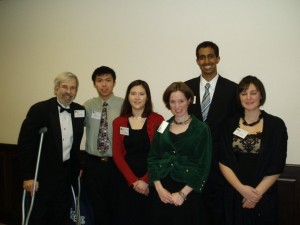 My name was called first, and I felt honored and humbled to be selected from a pool of such talented candidates. After that, everything just felt surreal – I went from writing for the campus newspaper, The Tech, to being mentioned in a front-page article alongside MIT’s other two winners, Ugwechi Amadi and Steven Mo. Most of all, I am grateful for the kind words and support from my family, friends, and the MIT community.
Photos courtesy of Camp Kesem MIT and Caroline Huang.
When it comes to dealing with the cost of college, politicians have provided some significant help for many families.
One of President Bill Clinton’s signature policies involved the development of the Hope Credit. Designed to help middle class families with college expenses, the credit has proven to be of immense help to legions of families since its inception.
 But in what has to be some of the best news in recent years for families with college-age students, the Hope Credit has been significantly tweaked in a most positive way. In fact, the only major criticism could well be that the adjustments are currently in place for just tax years 2009 and 2010.
The Original Hope Credit
Once upon a time, a single parent with an income below $48,000 a year (partial credit for those between $48,000 and $58,000) or two parents filing jointly who had combined incomes below $96,000 (partial credit for those between $96,000 and $116,000) were eligible for the Hope Tax Credit. The maximum amount of credit that could be claimed topped out at $1,800.
The credit could be taken against 100% of the first $1,200 in qualified tuition and related expenses that had been paid by the family and 50% of the next $1,200 spent. Therefore, if a family spent more than $2,400 in qualified educational expenses, they would see their federal tax bill reduced by $1,800.
However, the Hope Credit was available only for the first two years of college. In addition, you had to pay federal taxes to receive any benefit and of course had to pay at least $1,800 in taxes to receive the full benefit.
The American Opportunity Tax Credit
The first change to the Hope Credit, now called the American Opportunity Tax Credit, for 2009 and 2010 is that the maximum amount of the deduction has been increased to $2,500 for those eligible for the credit. The maximum comes from a dollar for dollar tax deduction for the first $2,000 paid in tuition and fees followed by 25% of the next $2,000 spent.
Second, for single filers the income restriction has been raised to $80,000 (partial credit for those between $80,000 and $90,000) and for joint filers to $160,000 (partial credit for those between $160,000 and $180,000).
Third, the credit may now be taken for the first four years a student is in college.
 And fourth, up to 40% of the credit can be refunded to those who paid less than $2,500 in federal taxes. For students not claimed as a dependent on their parent’s return and paying no federal income tax, they in essence can become eligible for a $1,000 tax refund at tax time.
Very Positive Step
Therefore, if you are, or your child is within the first four years of earning a college degree, the American Opportunity Tax Credit provides significant tax breaks. However, it is very important to understand what expenses qualify.
If your college tuition bill including course fees is $5,000 per semester ($10,000 for the year) and you receive scholarships totaling $8,500, then the out-of-pocket expense, the $1,500 is the amount eligible for the tax credit. But the phrase “qualified tuition and related expenses” has also been expanded to include expenditures for “course materials.” Course materials include books, supplies, and equipment directly purchased for a student’s course of study.
Students and their families should be reminded that plenty of other tax incentives do exist that are irrespective of the number of years in school including the Lifetime Learning credit or the direct income deduction for tuition-and-fees. The key is that the government will not let you piggyback or pile these options up. Instead, you must utilize one specific element.
And of course, if you are a parent or student that will have college expenses beyond 2010, you may want to write your congressman. As noted earlier, the American Opportunity Tax Credit is currently available only for 2009 and 2010.
Growing up, I wasn’t a big fan of playing chicken. The version we played was rather innocuous in the greater scheme of things; riding one-speed bikes at one another until someone veered away certainly represented a rather harmless version of the concept.
But in what was clearly a version of the longstanding game, Pittsburgh Mayor Luke Ravenstahl apparently has dropped his proposed tax request. For those not up on the issue, Ravenstahl had been seeking a one percent tax on college tuition to help offset city revenue shortfalls.
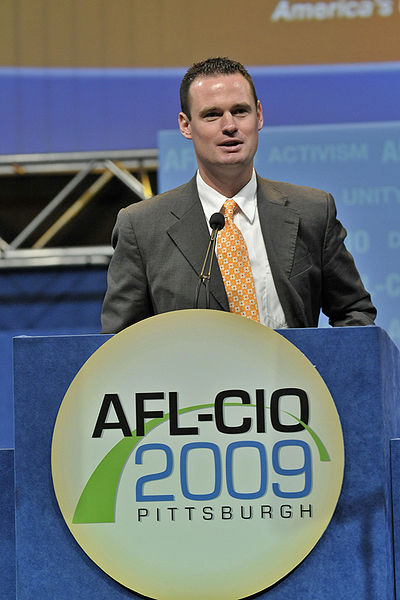
 The fundamental key to the proposal was Ravenstahl’s assertion that nonprofits were falling short of paying their fair share of city costs. But according to news sources, six weeks after insisting the tuition tax was a critical component of the city’s financial future, the mayor has dropped a request that he appeared ready to pursue through the courts if need be. But in an amazing development, he stood with a group of people that included university presidents to announce he was dropping the proposal based on a promise of help from schools and other tax exempt corporations.
At the news conference, Ravenstahl cited a promise from the University of Pittsburgh, Carnegie Mellon University and Highmark Inc. to donate a larger sum of money to the city than they had previously pledged. In addition, he insisted that university leadership, the city council and other corporate leaders would work to craft a plan that would then be physically taken to Harrisburg (home of state government) to change specific rules related to the city’s finances.
Increasing Taxes
While raising taxes in a recession is normally deemed a political nonstarter, Ravenstahl had previously proposed a number of revenue enhancements to help the city solve its financial woes. Two publicized suggestions involved increasing the $52-a-year tax on people who work in the city and expanding a current tax on payrolls to include previously tax-exempt employers.
But it was Ravenstahl’s proposal, a first-in-the-nation 1 percent tuition tax, that has received the most attention. And while higher education in the city received significant early support in its opposition to the idea, news accounts had a significant legal battle looming, especially since a council majority appeared to be in support of the measure.
With both the city and higher education about to potentially spend exorbitant sums of money on legal expenses, it seems that the mayor may have managed to get the schools to turn away first. The developments seemed to be akin to giving in to the mayor’s demand earlier in the month for a pledge of $5 million in donations in return for dropping the tax.
In a sign that they at least understood how things might look to the public, Pitt Chancellor Mark A. Nordenberg told sources the universities were not “negotiating under the force of the pressure of the tax.” Carnegie Mellon President Jared Cohon added, “We’re not pledging a contribution in order to get rid of the tax. We are prepared to pledge a contribution as the tax is gotten rid of.”
 But in a clear sign the mayor got the attention of the nonprofits, the institutions have decided to rethink their prior contribution commitments. Adding yet another feather in the mayor’s cap was the suggestion that future agreements with individual organizations will be made public.
According to blogger Mark Potter, nonprofits have not been contributing their fair share. “Some of the city’s biggest employers,” writes Potter, “its institutional non-profits, are still paying the least to support city operations.
“… until the tuition tax came along, nonprofits this year were content to shell out a voluntary donation that was less than two thirds of what they contributed back in the 1990s. Name another constituency in this city — residents, for-profit business, commuters — whose non-voluntary obligations have dropped that much.”
Tuition Tax
While state representatives have suggested that the mayor’s tax proposals were “half-baked” or “misguided,” the nation was watching the tuition tax levy very carefully. The idea has been postured in a number of other cities, particularly in light of current fiscal environments that have many state and local governments facing revenue shortfalls despite continued demand for much-needed services.
In today’s economic downturn, city governments face tea-party-like resistance to any suggestion of raising taxes. In contrast, colleges across the country still raised tuition and fees amidst the severe economic downturn.
That step certainly caught the attention of more than just the student population. Meanwhile, the subsequent events in Pittsburgh should certainly serve as a wake up call for all non-profits – ante up, or else.
Either that, or you soon will be playing a political game of chicken as well.
When it comes to higher education, there are two critical decisions to be made.
First, but not necessarily foremost, there is the choice of a specific school. A couple of weeks ago we took a look at the warning signs that you may have chosen the wrong school.
 Just as important as to the decision of where to attend college there is the choice of major. In fact, in a good many cases, the choice as to area of study ripples into the selection of a school leading some to actually choose their school based a desired major.
Yetstories abound of students changing their majors twice, three times and more. These are not tales – data indicates that approximately 70% of college students will change their college major at least once.
Perhaps you are someone who has begun considering such a change.
But you have heard that each time you change your major you may well move from a 4- to a 4.5- or even 5-year plan. That also is a statement based in fact. But your choice of major is something you really need to get right.
Here are five warning signs that you may have made the wrong choice initially.
Boring Classes
There is a saying:
A job is the place where I have to go to work to earn money. A career, however, offers the chance to follow my chosen pursuits and even get paid to do so.
When the day comes, on Monday mornings you will want to be feeling positive about the work-week ahead. While in school, the same situation applies: you should be looking forward to the classes that relate to your major field of study.
If instead you are finding your core major courses a pain, that they are flat out boring or uninteresting, then you have made a poor choice. If you are finding that you have little interest in the courses you are taking, there is little chance you will be excited about working in a profession related to that major.
Poor Grades
Most college students struggle with certain courses. After all, some classes are more difficult than others.
But most students earn their highest grades in the courses related to their choice of major.
 One sign you have made the wrong choice of major is that you are struggling to handle the demands of the core courses that set the foundation for your field of study. The basic question is simple: Are your grades for the core courses in your major lower than your grades in your other required classes?
If so, then you have made the wrong choice. A final transcript with poor grades in your major field of study is a red flag for employers – they will assume you are not likely to be able to bring the necessary skills to the job.
Not at All What You Thought
Now that you are in school and working on your field of study, you have a full sense as to what your major encompasses. Has that clarity reinforced or strengthened your original decision?
If you are having second thoughts, it could be that you chose your major for the wrong reasons. You may have been enticed by a hot career field or the earning potential of another option. Worse yet, you might have matched the popular choice of high school peers.
Now that you are actually involved in the coursework, is your major and area of study all you thought it would be? Is this a field that you can see yourself working in 40-hours a week, 52-weeks a year.
If not, you may have chosen the wrong major.
New Interests
Did you take an elective that brought you enormous excitement, a course where the work actually seemed enjoyable. A course where class time zipped by on a daily basis? A course that you truly hated to see come to an end?
Ultimately, the key question to ask is whether you were most content when studying the coursework in your major or did you find another area of study more appealing?
It is important that students differentiate between the course of study and the professor. It is the subject matter that we are talking about here, not how the material is presented or the ability of the professor to turn otherwise stale material into something palatable.
The bottom line is your major should be something you are excited about studying.
Changing Majors
 If your sentiment matches any of the four mentioned above you would do well to review your choice. But before making the decision to change your major, be sure to think things through.
First, take advantage of the services available to you on campus. Set up some time to discuss the idea further with the appropriate on-campus staff.
Begin by finding some time to connect with academic department personnel related to your initial choice as to a course of study. Then, take the time to meet with academic department personnel representing your potential new area of study.
Second, after those two discussions, take the time to seek out a counselor in the career center. Talking with a person that is independent of the two areas of study and processing your concerns with that professional can be a real help.
Most importantly, if you are not happy with your choice of major but have not yet been drawn to another field, these counselors can help provide some career assessment options. Perhaps through them you can begin pursuing some new and more interesting courses.
They can also help you walk through the ramifications of making a change. That may include any added expenses as well as whether or not the change will require the postponement of your original graduation date.
The city of Pittsburgh is abuzz over the announcement of Mayor Luke Ravenstahl’s proposed plan to institute a 1 percent tax on college tuition for the 2010 budget.
Calling the revenue enhancement the “Fair Share Tax,” Ravenstahl has estimated the proposal could raise as much as $16 million for the city. And while conservatives would insist this is just another case of taxing anything that moves, Ravenstahl sees it otherwise.
When it comes to the students taking classes within city limits, it is “the city and its taxpayers” that “bear the burden of providing them with services” states Ravenstahl. The youthful mayor goes on to claim that the “Fair Share Tax” idea is a result of his inability to fairly tax commuters and non-profit institutions.
Colleges Have Themselves to Blame
Naturally students and college officials have raised an uproar over the proposal. But as we muddle through what many experts call the greatest financial challenges since the Great Depression, state and local governments are struggling to balance their books as their revenues decline. All across the country, those same agencies, faced with enormous budget shortfalls, are making massive cuts to services. Without further revenues, those agencies will need to cut services much further over the next few years.
Meanwhile, colleges have dealt with the financial crisis by raising the cost of tuition and fees. According to web sources, at private four-year colleges, the increase was 5.9 percent over the prior year. At public four-year colleges, the increase was 6.4 percent over the prior year. Those increases simply reflect an ongoing trend that has continued unabated for the past thirty years and have critics insisting higher education has dealt with the fiscal crisis by passing the problem on to their students.
And of course, when it comes to fees, colleges and universities have written the book on how to add extra charges. Today’s typical college bill will include a lengthy list of fees from technology to student activity to labs to the parking sticker on a car, all above and beyond the basic tuition and room and board charges. Talk about taxing anything that moves.
Flat Percentage Concept
What makes the proposal so interesting to many outside the field of education is the notion that it would be a 1 percent tax on tuition. With private colleges now topping more than $30,000 a year in tuition, the tax would hit students much harder at what are often dubbed the “elite schools.”
 In contrast, at community and public colleges, where tuition is much cheaper, the student assessment would be much lower. This of course has a few folks insisting that the tax may actually be fair. That stated, those who attend the wealthier schools would insist they do not consume a larger portion of the city’s services than say students from a school where tuition was much lower.
The mayor has hired Joseph C. Bright, former chief counsel to the state Department of Revenue, to help pursue the 1 percent levy on tuition. Bright is on record as stating that the city will win the necessary court battle to have the tax in place for 2011.
However, one State Representative Paul Costa has announced plans to introduce a bill to put an end to the tuition tax proposal.
A Downer for Pittsburgh Students?
The levy would certainly be a major issue if Pittsburgh were the only city to institute such a tax. Seemingly, fewer students would enroll in a Pittsburgh college if such a tax were in place.
However, Inside Higher Ed has noted that Pittsburgh is not alone in discussing the idea, citing recent discussions to tax revenues from higher-education institutions in Boston, Providence, and Berkeley.
As the battle moves forward, we can be certain that the rest of the nation will be watching very closely. And we would suspect more than a few city officials across our great land, jealous of how easily colleges pass hikes onto students, could immediately move forward with proposals of their own should the concept be enacted in Pittsburgh.
As Thanksgiving approaches and the first semester enters its final weeks, now is the appropriate time for freshmen to take stock of their choice of a college. If you were like virtually every other student in America, you began the year experiencing some real feelings of homesickness. Not only did you miss the high school friends you no longer get to see, you found yourself missing that family dinner table.
 Many a day you felt like an outsider. Not only was everyone older than you, they all seemed to know the routines you were still trying to figure out. Even so, you all faced yet another challenge, living with a complete stranger in a tiny dorm room that had you feeling that your privacy had been compromised forever.
All of it only added layer upon layer of stress to the significant academic demands of your classes.
But by now, if you are like most college students, you find you have picked the perfect place. You have had the chance to meet many wonderful new friends and adapted to the give and take of living with another student. Though you still feel a sense of wanting to communicate with former friends and family, you now have ample social opportunities and a host of people that help lessen the emotional tugs of those you have not been able to see.
Most importantly, you have a sense of the academic rigor and how to meet the educational demands being placed upon you. In sum total, if you are the typical student, you have been able to carve out a new place that should now feel like home.
Whereas in September and early October we would counsel patience, as Thanksgiving approaches if you have found that you still have not made any friends or are not feeling positive about college, it could well be that you did not select the right school for you. Here are five warning signs you may have picked the wrong college.
Feeling totally Out of Place Socially
Do you continue to feel out of place socially? Have you had real difficulty finding at least two other students who match your values and view regarding college?
Does your school seem to be a steady stream of parties with few folks focused in on academics? Or, does the atmosphere appear too stuffy and intense as everyone seems to hunker down and study incessantly?
Perhaps you have not found a single classmate that shares your particular religious views or who shares your interests in environmental or political issues. Maybe you feel out of place wearing Walmart jeans amongst folks who see JCrew as cheap fashion.
While it is natural to feel alone the first month or two at school, by now you should have come across a few individuals that match your values. If you truly have made a strong effort to find classmates yet still feel like an outsider, you may well have selected the wrong school for you.
The Wrong Physical Location
 Were you concerned that your choice of college was going to get in the way of the friendships you began developing in early childhood? Or worse yet, did you select your school based on your desire to still be able to see a certain boy or girl?
And because of those concerns, did you choose your school simply to be closer to home only now to find your high school friends showing up on campus every weekend or worse yet stopping by during the week?
Perhaps it was the opposite, in a desire to be on your own, you chose a place that put some serious miles between you and your former life. But perhaps you chose such a distance that as Thanksgiving approaches you are now stuck on campus with not enough money to fly home and too far to hop in a car and ride.
Experts advise students to be sure they choose their school based on the programs it offers and their personal academic interests. If instead you selected your school based on a specific location you may well find yourself regretting that choice.
Safety
To be at your best facing the rigors of a college education, you positively must feel safe on your college campus. If for any reason you find yourself with such concerns then you likely have made the wrong choice of school.
For different students, feeling afraid comes from very different elements. Those used to an urban lifestyle may well be uncomfortable at night walking on a rural campus where there are far fewer lights and fewer people around. For those students, the rural setting appears devoid of a truly well lit path to follow at night.
In contrast, those who have grown up in a rural setting may find the noise and the hub bub of people constantly milling around very intimidating. Such a feeling can be doubly strong when combined with an urban feel where many of the people you encounter are not necessarily fellow students.
The bottom line is your campus must feel safe to you – that includes your dorm and the walkways to and from all class buildings. And while it is easy to say buck up, fears are not easily overcome, no matter how hard you try to rationalize them.
If for some reason you constantly find yourself confined to your dorm room in fear of what lies beyond, then you most definitely have chosen the wrong college for you.
Co-curricular Activities
Did you select your school based on a desire to be part of a specific athletic team or club? If so, are you finding the activity to be everything you thought it would be?
Or is the commitment much larger than you expected? Is the focus solely on winning? Is the coach or moderator unwilling to modify practice or the scheduled meeting expectations in light of your academic workload?
Are you enjoying the activity but finding the academic setting ridiculously easy or boring? Do your professors inspire you and are you learning new skills? Or do you find yourself tolerating your academics and focusing solely on the co-curricular?
If any of these options describes your setting you may well have chosen the wrong school. Remember, the goal is to obtain a diploma and position oneself for career options.
A great co-curricular program cannot make up for a lackluster academic experience – worse yet, your co-curricular program should not interfere with your fundamental reason for attending college in the first place.
Work Is Too Easy
 While at first thought it may seem better to be finding the work too easy than too hard, the harsh reality is that you are paying significant amounts of money for the opportunity to learn new things.
Perhaps you were just unlucky and got a weak professor that knows that placing demands on students also means more work for him or her.
Or maybe you have chosen the wrong level of courses and the wrong area of focus for you.
However, if you are taking five courses and you find that not one of the five is challenging you or providing you with new learning, this also reflects on the school and the assignment of courses.
Most students find the college workload adjustment significant, so challenging that they feel overwhelmed at first. That is the normal setting for students – so if you find you are coasting through your first semester you should definitely take stock of your program choice, your choice of courses, and your selection of a college.
Transferring Out
Again, after two plus months of effort you should now be settling into the place you are excited about spending the remainder of this year and the next three as well. If that is not the case, then you may well have made the wrong choice of school for you.
If you are beginning to feel as if the college you chose just isn’t right for you, the last thing you should do is pack up and go home. Instead, you need to focus in on the academic task ahead to ensure you complete the semester in good standing. There is simply too much money invested to simply give up.
In fact, most experts insist you should proceed onward to your second semester even as you begin looking at alternatives. The rationale is simple, if you stay on and prove you can handle the academics, you will be able to demonstrate that you are not simply a weak student looking for an easier place to attend school.
Those same experts insist you should stay involved in your respective activities and perhaps even seek out new ones. With solid grades and a demonstrated commitment to the task at hand, you will be more able to successfully pursue an option at another school.
Remember, the goal will be to transfer to a school that you desire, not one that will simply accept you. The fact of the matter is if you cut and run, you may well eliminate any chance of transferring to your chosen alternative.
A college degree can be affordable
Justin Pope, writing for the Associated Press, pulled no punches regarding the ongoing increase in college tuition for 2009-10. With costs rising anywhere from 4.4 percent at private schools to 7.3 at community colleges, Pope stipulated that colleges were handling the recent recession by simply passing “much of the burden of their own financial problems on to recession-battered students and parents.”
Those ever-increasing costs, consistently higher than the rates of inflation, have a number of folks questioning the value of a college degree, especially as students pile up exorbitant amounts of debt in their pursuit of a diploma. While we agree that absorbing significant debt while earning a diploma is a bad idea, we do still believe there is great value in obtaining your degree.
 One only need examine the recent numbers from the economic downturn to find the necessary support for our assertion. While millions of young people are out of work, the percentage of those unemployed who have a bachelor’s degree is about half that of those without a degree.
But the ultimate key is to find a way to earn that sheepskin without mortgaging your future in the process. Scholarships and grants can certainly help students on the funding side immensely, but for those with a mindset, there are a number of ways to dramatically reduce the overall costs of earning a college diploma.
Reducing College Costs
The first aspect of controlling your college costs is to simply examine the cost of tuition by school categories. Here are the numbers as reported by the College Board:
These numbers are definitely the first ones to analyze, but when looking at ways to reduce this cost, there are two critical elements to these figures.
First students must look at the cost per credit hour. When examining the published cost, students must look carefully at both the published tuition per credit hour and the latest college invention, fees that are generally listed as added costs that can raise the price burden per credit hour significantly.
Second there is the credit hour issue alone. Most degree programs require 60 hours of study for an associate’s degree and 120 for a bachelor’s. If you can reduce the number of credit hours you must pay for you can significantly reduce your cost of overall attendance.
Step One – Reducing Costs per Credit Hour
For 2009-2010, the tuition and fees at public two-year community colleges would produce a per credit hour average of about $85.00 ($2,544 in total costs divided by the average course load of 30 credits). In contrast, we see that the average cost per credit hour for in-state students would be $234 for public schools and $876.00 for private.
 So the first step to controlling costs per credit hour is to examine the best way to obtain your desired degree. Simply-stated, unless you have unlimited funds for school, a well-to-do uncle or grandparent, forget about those expensive private schools.
While private schools may boast of providing a better product, it is important for prospective students to understand that college is what you make of it. In fact, many of today’s top business leaders graduated from public institutions: Warren Buffett, CEO of Berkshire Hathaway attended the University of Nebraska-Lincoln. H. Lee Scott, the CEO of Wal-Mart Stores, attended Pittsburg State University in Kansas while James Sinegal, the CEO of Costco Wholesale attended San Diego City College.
Therefore, the first way to manage you college costs is to attend a public college, generally a campus of your state university system. I know: that just might not sound so exotic when you are discussing the topic with family and friends. But it is important to realize that exotic costs bigger bucks.
Second, if you truly want to minimize costs yet obtain a diploma, the most cost-effective road would be to earn your first 60 credit hours (years one and two) at a local community college, then transfer to a public state university school for your final 60 hours (years three and four). Even attending community college for one year would represent an enormous reduction in college costs.
There would no doubt need to be some initial homework to determine which community college credits would be transferable upon matriculation at a state school. You might even have to do some negotiating, but many of the mundane course requirements of any degree program could certainly be addressed at a community college. And if you find a course will not transfer, don’t take it. Save your funds for later. All total, with a little effort you could knock off more than a year’s worth of the higher-priced tuition costs.
Step Two – Reducing Credit Hour Costs
The second way to dramatically decrease your college costs is to reduce the number of credits you must pay for at the required tuition rate. There are almost an unlimited number of ways to reduce the number of credits that you must shell out funds for, but a good many of them must be accessed while you are still in high school.
For example, taking Advanced Placement courses can result in potential college credit. Such courses are often available at your local high school either by direct instruction or through the school in online format.
Students gain access to college-level curricula and upon completion of the material may take an exam to determine mastery. Passing that exam can provide college credit at a large number of colleges across the country.
Students may also take the College-Level Examination Program® (CLEP) tests in 34 different subject areas. These exams, at $72.00 per test, can provide anywhere from 3-12 credits at certain colleges at a fraction of the cost.
Today, many local colleges also offer courses to high school students in their area free of charge (referred to as early college). Again, given the cost per credit hour, students should investigate such options extensively and take advantage of what is available.
In all instances, including the possibility of seeking life experience credit for a work portfolio, the key is to do one’s homework up front. That means sitting down with college officials to review what credits the school will accept when a student does enter that respective institution.
For example, some schools will not accept AP classes whatsoever. Others will allow credit only provided students score a four or five on the exam (even though a three is considered a passing score).
While in college, another very distinct option to reducing credit-costs is referred to as the co-op or internship experience. Here again, the concept is dependent on the school one attends.
Co-op and internships provide students practical learning skills in a specific field through the use of work placements. In such programs, students may receive either pay or course credit for their time. If the experience is in your field of study, the work-related insight one gains is incredibly valid for one’s future career.
At the same time, many such experiences also offer college credit when students combine the proper reflection and academic review to the work experience. In certain instances, these experiences serve as a triple benefit, providing some cash to help pay the bills, some college credits to reduce the number that must be paid for, and even the possibility of potential job placement opportunities that can form as a result of the connections one makes while performing their service.
Reducing Miscellaneous Expenses
In addition to the tuition costs, students face a number of other related expenses while working towards that diploma. Such costs include room and board, books and supplies, and travel expenses.
The bottom line is these costs cannot be categorized as mere incidentals, certainly not when repeated over a four-year period. Once a school is chosen, tuition costs are set but students still have decisions that can greatly reduce the incidentals that accompany tuition costs.
Step Three – Eliminate the Room and Board
One way to reduce your four year college outlay is to rethink the idea of room and board. While many cringe at the thought, it is imperative that students understand the current going rate for room and board is now $8,193 at public colleges and considerably more at some private, elite schools.
 Examine that number carefully – it is more than the average cost of tuition at four-year public schools. And it is more than triple the average tuition costs at a two-year community college.
Now spread that out over four years – a total of more than $30,000!
The simplest way to reduce this expense is to live at home. Such a decision becomes a possibility if you consider the community college/state university combined four-year plan we mentioned earlier. It certainly becomes viable if you consider community college for the first two years at a minimum.
If your home residence is simply too far away, you also need to carefully assess the school rates for both the housing and the meal aspects.
It could well be far cheaper to lease an apartment or house, especially if you can find others to share that cost.
In regards to meals, most school plans represent a significant cost per meal. In addition, missed meals seldom produce anything in the way of refunds if you do not access them. So when purchasing any meal plan, be sure it is a plan you will access.
There is no doubt that living at home limits one of the indirect benefits of college, the activities available and the connections made on-campus. To obtain those experiences, students will have to work harder at this element. But the experiences are available to all students, even if you are not residing on campus.
Step Four – Distance Learning Courses
Once available primarily at for-profit institutions, online learning is now available at a multitude of schools including state university systems. Completing one or a number of online courses can greatly impact your miscellaneous expenses.
We noted earlier the need to take into consideration fees when calculating tuition costs. Online courses often allow students to be exempt from a number of facility and campus-related fees such as student activity, campus access and technology fees. At one Florida school that lists tuition costs as $50.00 per credit hour for in-state students, those costs move to $150.00 per credit hour when all the fees are factored in.
In addition to potentially eliminating these on-campus fees, online courses also eliminate travel expenses and room and board entirely. They also can be a key component of our final savings step.
Step Five – College in 3.5 or 3.0 Years
While tuition costs are per credit hour and programs mandate a specific number of credits, miscellaneous expenses occur each semester. So one of the simplest ways to reduce total outlays is to reduce the number of semesters you are at school.
That reduction can of course come from the aforementioned reduction of credits needed. It is for this reason that AP courses, CLEP tests, Co-Op programs and Internships compound your savings, reducing costs at both levels.
 But it can also come from taking additional courses each semester. Taking one extra course, either via online methods or simply taking another traditional class, for just five semesters will reduce your program from 4 to 3.5 years. Taking two online courses each summer and one extra traditional class each semester could reduce your college program to 3 years. Prerequisites can make this a challenge but with a little effort you can reduce the standard four-year program.
Remember, such steps would carry tuition costs per credit hour, but they would greatly reduce the costs of room and board and those incidental traveling expenses associated with attending school.
Control Your Expenses and Earn Your Degree
While costs are growing substantially, it is important for students to know that out-of-pocket costs have trended down in recent years. In fact, while tuition and fees have risen as much as 20% since 2004, the average net price of college has dropped over the last few years.
The reason is the greater availability of grants, financial assistance and tax benefits.
Of course such developments make it all the more enticing to consider our steps to cutting the costs of college. According to a recent Time article, the increased aid development means that the “average student at a two-year college or university pays nothing in tuition and fees and collects about $500 toward living expenses.”
Of course, marketing is what drives the business world – if you package your product well enough, people will seek to acquire that product at all costs.
Generally speaking, all colleges have taken advantage of this concept. But some, specifically those elite private schools, have done so to the extreme.
The result is far too many students are being enticed, taking on ridiculous levels of debt as they attempt to obtain a diploma from a school they simply cannot afford. It is time that students, as well as their parents, went back to the old school adage, finding a quality product at a price they can afford.
With a little work and a certain level of sacrifice, students can earn that coveted diploma without mortgaging their entire future in the process.