Check Out Our Financial Aid Tools

College Admissions
College Admissions
Preparing for College
The Best College for You
What to Study
Applications
Education Options
Education Options
Private Universities
Public & State Universities
Community Colleges
Scholarships
Scholarships
African American Scholarships
Latino Scholarships
Native American Scholarships
Women Scholarships
College Grants
College Grants
Federal Grants
Merit Based Grants
Need Based Grants
Student Loans
Student Loans
Federal Student Loans
State Student Loans
No Co-signer Student Loans
Bad Credit Loans
Student Loan Consolidation
College Survival
College Survival
Financial Aid Tips
The Digital Student Blog
One of the most expensive and at times frustrating aspect of the college scene is the biannual semester book purchase. Long lines and big outlays for books that you are afraid to go without yet may use very little make the process a very negative one for students.
If you find the process more than you can stand or the cost prohibitive, then you may want to take a peek at a new concept and a new site, Chegg.com.
Lease, Instead of Purchase
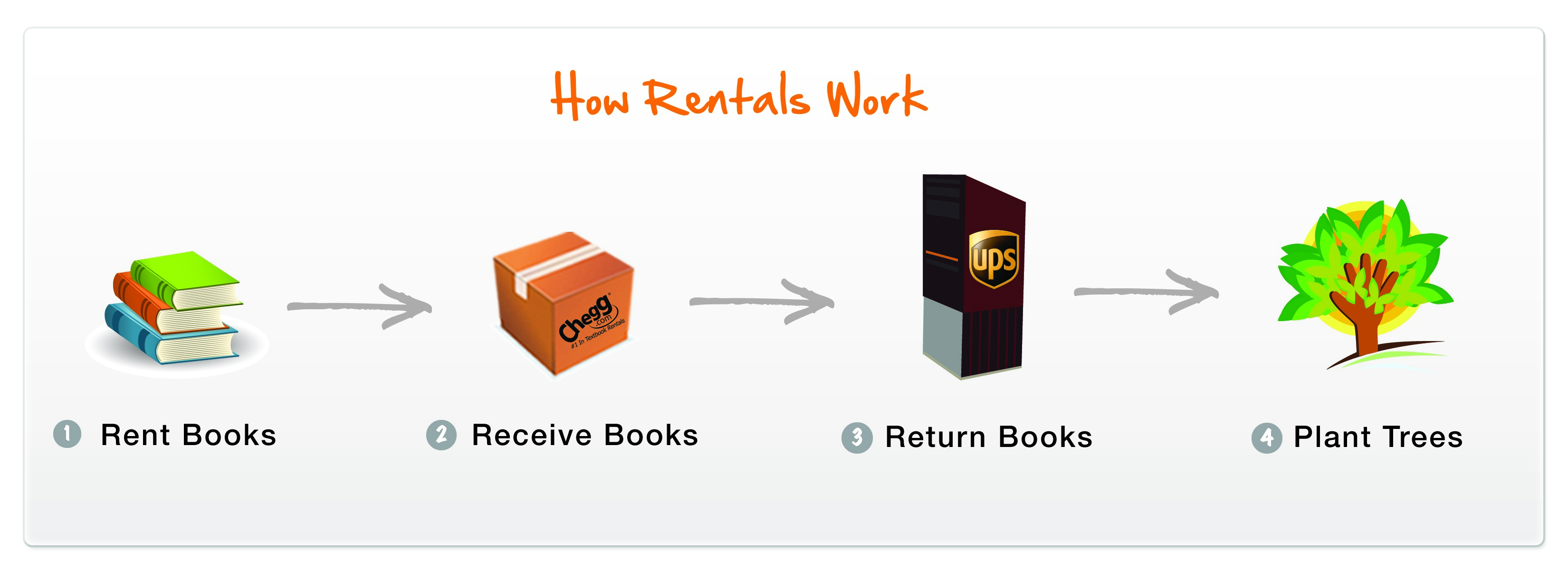
 Leasing textbooks is exactly as it seems: college students may rent as many hardcopy textbooks as they might need for the upcoming semester or year. By renting books instead of purchasing, students immediately reduce the overall cost burden of this aspect of their education. In some cases, the savings can be as much as 80%, especially if a text is brand new.
Students may also select the needed books online from their own computer and then have them delivered directly to their dorm room or apartment. No waiting in long lines just for the chance to spend gobs of money.
Chegg.com
A Santa Clara, California-based company, Chegg.com is one such marketplace for renting textbooks online. The concept is considered so forward-thinking that the company recently raised $25 million in investment funding from a number of high profile venture-capitalists.
The additional financing will enable the company to pursue an aggressive growth strategy. With the funds, the site will be able to provide enhanced services including the expansion of its textbook rental catalog.
Adding to the Chegg process, students may also purchase texts from the online site. Students will also know at the time of purchase what they can expect for a possible cash return should they decide they do not want to keep the text.
Support for the Environment
The company, founded in 2005, understands the concept is a green issue as well. Clearly, over time the number of books being produced and wasting away on shelves will be reduced saving countless resources.
At the same time, to reinforce an environmental message, Chegg plants one tree for every textbook rented. Since getting the textbook leasing option underway, the company has planted over 150 city blocks worth of trees.
Decision Time
There could well be books that students do want to purchase as they could be potential future resources while on the job. Texts in courses related to one’s major may not be ripe for the leasing process.
However, the ability to both purchase or lease online means that Chegg is a site students should definitely consider. While the influx of capital should greatly enhance their library of text offerings, Chegg currently offers over 1 million books to choose from.
Students looking for a better process and cost savings may want to pay Chegg.com a visit prior to making their spring semester book purchases.
Flickr photo courtesy of wohnai.

A name that should be familiar to almost anyone that’s picked up a game in the last 20 years, the Carmen Sandiego series lived long and prospered between the years 1985 and 2001, seeing multiple releases on most platforms that were around at the time. Kick-started by Brøderbund Software in 1985, the series was essentially a way to make the subject of Geography appear “hip and cool” to “the kids” by offering it up as a game, rather than something you learnt at school. Educational content was a staple of the series as you followed the trail of superthief Carmen Sandiego and her band of V.I.L.E (Villains’ International League of Evil) henchmen, with each new game in the series expanding the search across the globe and eventually including travelling through time as a viable option of pursuit.

The beloved “city simulator” which has consumed more man-hours than sleep first started in 1989 and was made by Maxis and legendary game designer Will Wright . The premise behind the game (and every subsequent Sim City game) was to…Er…Simulate a city. More accurately, you assigned various zones (residential, industrial, commercial and the like) in which citizens would build related services and/or buildings. Eventually, after laying down water pipes, roads and power lines, you’d control the city in more indirect ways like managing the economy, politics, police and emergency services. This was the game to teach an entire generation or two that it wasn’t the “winning” that counts, but more the building an epic sprawling metropolis, only to destroy it by unleashing Godzilla upon it whilst laughing maniacally.
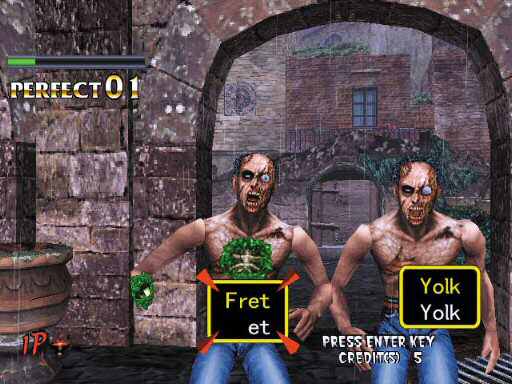
Everyone and – quite possibly – their mother has heard of Mavis Beacon Teaches Typing, but have you heard of The Typing of the Dead? You might have, but it makes for a dramatic opening paragraph. Just in case you haven’t heard of it, it follows in the same educational vein as Mavis Beacon did, with the ultimate aim being to enhance your typing skills. Except with zombies. There’s an age-old saying that if you add zombies to something, it’ll make it infinitely better. Except oatmeal, I don’t imagine anything making that better. This genius of a game took the original House of the Dead 2 game and transposed the Mavis Beacon typing format over it, so in order to defeat the oncoming zombie hordes, the player had to type words that appeared on the screen, with each letter being a gunshot. Finishing a sentence was never quite so satisfying.

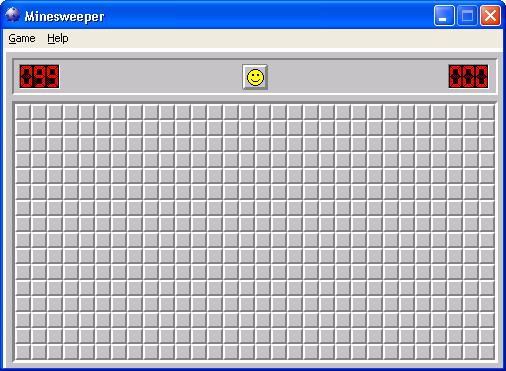
Solitaire was originally packaged with the Windows 3.0 (in 1990) operating system as a standard item, the aim of which was to ease users into getting to grips with the mouse-based control system, as up until then, the primary way to navigate was via a mixture of the DOS interface and keyboard shortcut commands. Suddenly people everywhere were getting used to basic mouse functions like drag-and-drop, double clicking and generally just moving the mouse about after a lifetime of near-total keyboard usage. Naturally this led to many problems in the workplace, as more and more people became hooked on the game, decreasing their work output exponentially and occasionally leading to firings. The same could be said of Minesweeper, with its number-based, spatial-awareness-promoting, speed-run-inducing simplicity.

Perhaps arguably the best chess game ever, Battle Chess managed to turn a game as uneventful and boring (for then children and quite possibly anyone not really into chess these days) into an engaging and often exciting experience. Exactly as it sounds, it was normal chess…With battles. Both the sound and the pseudo-3D effects that were used were rather impressive for the time (1988, developed/published by Interplay). But more importantly, it made chess awesome (Or even more awesome, depending on your view of the game)!
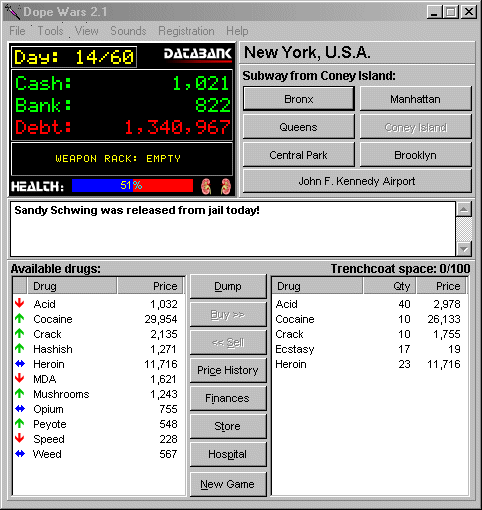
Whilst the subject matter might not have been the most politically correct of the lot; it was nevertheless an addictive and popular game. The player assumed the role of a drug dealer trying to earn a living by doing what he/she knows best, namely dealing drugs to everyone, quite possibly also children (dealing drugs to children, not dealing in children). On the surface it was a simple game of “making loads of cash by being bad”, but subconsciously it taught valuable life-skills like budgetary management, being able to forecast a financial market, the importance of supply and demand and how much a kilo of crack costs in New York.
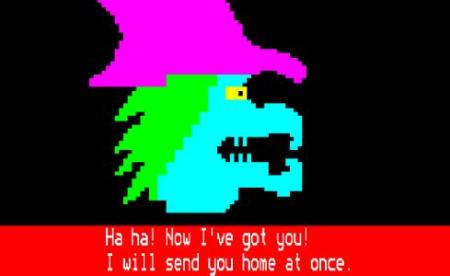
Billed as an “educational adventure game” and released in 1983 for the BBC Micro (it was also ported to such retro stalwarts as the Amstrad CPC, Commodore 64 and the ZX Spectrum), this game had you out on a quest to save the children of the King and Queen of the Kingdom of Mountains, whilst all the while avoiding some random evil witch whose motive for being evil was probably just because she felt like being really irritating at the time. Most of the puzzles involved were logic-based, others could be quite bizarre and random, but overall the game was a light-hearted puzzle-fest most notable for its awesome music.

This was a fantastic SF strategy/action isometric game. Syndicate (which later became a series of games) was released in 1994 by those bastions of excellence, Bullfrog. It was set in a dystopian future in which corporations fought for dominance over the global population by using cyborg agents, which was pretty cool. The game saw you as an executive from a corporation in command of a team of cyborgs and your job was to carry out various missions on behalf of said corporation, by any means necessary, usually by killing and destroying everything in your path. The game had a distinct SF/Cyberpunk flavor, which many found to be appealing; along with the resource/research management aspect of the game, with regards to if you ran out of funding for your agents/equipment/tech research, you were in big trouble. It was also good for improving geography skills, as you strategically planned to dominate the entire globe, country by country.
A recent report card from the Josephson Institute paints current high school students in a very negative manner. Citing “entrenched habits of dishonesty” among young people, the survey of more than 30,000 high school students indicates that more students are lying, cheating, and stealing than ever before.
Ironically, we had a disillusioned student leave a comment on the site just after the report card was made public. Coming as a response to our article, The 11 Top Reasons Why Students Drop out of College, the writer not only revealed a significant level of discouragement, he offered a possible solution:
“I am Soooooooooo burned out of this entire experience!!! What would happen if I were to just say that I had the degree on my resume? Anyone ever tried that? How many employers actually check?”
Hopefully, it was a tongue-in-cheek response. But if it wasn’t……..
Honesty and Integrity
Whenever I hear someone propose such a solution, even when the option is thrown around in jest, I can’t help but turn to the very public and humiliating story of George O’Leary.
 During a seven-year period, O’Leary resurrected a moribund Georgia Tech football program. Guiding the team to five winning seasons in his final six years, O’Leary was named the Atlantic Coast Conference ‘Coach of the Year’ award in both 1998 and 2000, and was also named the ‘Bobby Dodd National Coach of the Year’ in 2000.
In 2001, the University of Notre Dame, a proud academic institution that routinely graduates more than 90% percent of its student body, selected George O’Leary to be its new head football coach. His appointment resonated with Notre Dame boosters and football fans everywhere.
His selection was seen as an apparent “pull oneself up by the boot straps” kind of story that epitomized the American work ethic. An insignificant football player at a small university, O’Leary had languished long and hard as an assistant football coach before his revival of the football program at Georgia Tech.
Called the perfect candidate by school officials (right down to his Irish name), this hard-working, outstanding leader of young men was deemed the perfect choice to restore storied Notre Dame football to its former golden days. Yet, what began as a true “feel good” story rapidly disintegrated into one of the saddest of public moments for both a coach and an institution that prided itself on integrity and accomplishment.
Reporters Begin Checking Resume
First, one reporter, seeking to find some interesting quotes from the University of New Hampshire regarding O’Leary’s collegiate playing days, made a call to former members of the coaching staff at the school. The reporter was surprised to learn that no one on the coaching staff remembered O’Leary.
Further research failed to find any school records that verified that O’Leary had ever played football for the tiny Division 1AA program. Confronted with this information, O’Leary acknowledged he had embellished his resume.
No, he was not a three-time letter winner at the school as his resume indicated. Injuries and health problems had kept him from receiving any playing time.
Provided with this insight, Notre Dame initially stood by its candidate. After all, O’Leary was reported to be a man of integrity and his tenure as coach at Georgia Tech coincided with the school’s reemergence as a national football power. Notre Dame, at the assurances of O’Leary, were told that his embellishment of his playing record was a singular blunder and that there was nothing else for the university to be concerned with.
A Graduate Degree?
However, the University was soon confronted with further fabrication.
O’Leary’s resume included his having earned a masters degree from NYU in 1972. That graduate degree was extremely important because to work at the collegiate level, even as a coach, one generally must have some form of higher degree.
 Yet, it seems that once again Notre Dame’s candidate had taken the liberty to embellish his achievements. Though NYU acknowledged O’Leary had been a student there, their records indicated that he had never earned a graduate degree.
Amazingly, these fabrications had been part of O’Leary’s resume since 1980 when he had filled out an application for an assistant coach position at Syracuse University. These concoctions had never been truly scrutinized until his appointment as head coach at one of America’s most storied institutions.
A stunned national sports audience read with great chagrin of O’Leary’s foibles and their effects on his coaching career. Elders at the time noted that once again ethical shortcomings in one’s youth had come back to not only haunt, but perhaps in this case, even destroy a man’s career.
At the time, much of George O’Leary’s amazing fall from grace was seen as a snapshot of what is wrong with collegiate athletics. O’Leary saw it differently, blaming it on ‘resume padding.’
In submitting his resignation to Notre Dame, one he had been asked to submit, he acknowledged: “In seeking employment I prepared a resume that contained inaccuracies regarding my completion of course work for a master’s degree and also my level of participation in football at my alma mater. These misstatements were never stricken from my resume or biographical sketch in later years.”
A Lesson for All
Any student thinking of falsifying his or her academic record or resume would do well to give careful consideration to the story of George O’Leary. There are numerous lessons that can be learned from the situation, not the least of which involved many, many years of hard work all undone in a matter of days because of ethical transgressions committed at an early age.
 Ironically, at the time, employers did not initially check on O’Leary – the checks were actually done by reporters seeking not to confirm or undo, but to report on what was believed to be an interesting and worthy story.
However, since that time, public institutions began putting fact-checking measures in place. After all, no employer wants to ever be exposed to the public level of embarrassment the University of Notre Dame was subsequently subjected to.
In response to the earlier comment from one of readers, “What would happen if I were to just say that I had the degree on my resume? Anyone ever tried that? How many employers actually check?”
The answer is yes at least one notable person has tried it. And the second answer is yes, many employers now check.
As to “What would happen if I were just say that I had the degree on my resume?” Well, this story clearly reveals that blatant falsifications can come back to haunt you at the most inopportune time imaginable.
Flickr photos courtesy of MDB 28, Glenn and Telethon.
It is likely that at every high school or college graduation ceremony, at some point in time, at least one of the speakers will insist that the secret to a life of fulfillment is to remain true to one’s dreams.
Yet, at the same time, it is also likely that a look towards the audience would reveal at least one adult with a cynical eye dismissing such blatant optimism in a most scornful manner.
Fortunately, however, there are still some students who not only listen to the speaker’s message of hope, they take it upon themselves to test the theory.
The Desire to Make a Difference
 When asked about her involvement in Division I athletics at a high-profile school, Parker Goyer could point to many key lessons from the world of sports: persistence, work ethic, setting goals, and overcoming setbacks. She also could point to the year-round commitment necessary to compete at such a high level and the subsequent time constraints that participation had on her ability to utilize these important skills while being of service to others.
But the year-round commitment to school and to athletics left Goyer little opportunity to travel abroad or to partake in community service. For the 2007 graduate of Duke University, the latter was a big issue.
Inspired by the likes of Wendy Kopp, the founder and CEO of Teach for America and Greg Mortenson, a one-time mountain climber who has dedicated his life to building schools in remote parts of Pakistan and Afghanistan, Goyer chafed at the lack of opportunities student-athletes had to be of service to others.
Recognizing that there had to be other collegians with similar sentiments, Goyer came up with a bold plan, one that would allow student-athletes to utilize their skills and talents to help serve young people in countries less-developed than her own.
Coach for College
 Now in her first year at the Harvard Graduate School of Education, Goyer conceived of the “Coach for College” program while visiting Vietnam and Belize the summer following her graduation. While visiting those countries, Goyer saw first hand an underdeveloped educational system and countless young people who simply did not have a cadre of role models to help lead them.
The former Duke tennis player saw an opportunity, a true win-win in the proverbial sense. If she could create a program that would allow American student athletes to put their athletic lessons to work in real life settings, the youngsters in some of the world’s poorer countries would not only have access to some key role models, those youngsters would have the chance to learn some valuable skills as well.
“A major guiding principle of the Coach for College program is that student-athletes have great traits they develop through sports,” explains Goyer. “But they don’t always apply these traits which they perfect on the playing field in other settings.”
“I wanted American student-athletes to realize that, by virtue of being highly-skilled sports players in some of the best higher education institutions in the world, they have tremendous power to make a difference.”
Program Launched in Summer of 2008
With a goal of utilizing sports to teach key life lessons, Goyer envisioned a group of college athletes giving up some of their summer time to help the youngsters in underdeveloped countries learn “critical thinking skills” and promote “excitement about academics.” While the need for funds was significant and the task of raising half-a-million dollars a daunting one, the 23-year-old never doubted the worthiness of her concept.
 “A lot of people were skeptical at first and thought that I was too young, that this was too big of an idea, and didn’t know if I could pull it off,” reveals Goyer. “I think I was able to succeed by setting concrete goals, identifying key supporters early on, and using their advice and support to make steady progress towards my goals, one step at a time.”
Adding to her belief in the program concept itself, the idea of teaching life lessons through the world of sports, Goyer found herself drawing on the lessons she had taken from being a competitive athlete.
“Setting up the Coach for College program reinforced the value of sports in transmitting key life skills. I found myself drawing upon some of the same skills – persistence, work ethic, setting goals, overcoming setbacks, etc. — that I had used to make progress as a tennis player.”
Putting her organizational, goal-setting and perseverance skills to the test, Goyer secured more than $480,000 to fund the first two years of her concept. The monies came from two Atlantic Coast Conference rival colleges, Duke and the University of North Carolina, as well as the National Collegiate Athletics Association, the U.S. State Department, and a number of other individual and corporate donors.
With funding secured, this past summer student-athletes from both Duke and UNC made their way to rural Vietnam for the first ever “Coach for College” sessions. In addition, bilingual students from Can Tho University also led the training that involved the games of badminton, basketball, soccer, tennis, and volleyball.
 A key component of the program included the building of a five-in-one sports court, with lines for the sports that would be taught in the program. Constructed on the grounds of the middle school, local workers built it using money from the funds Goyer had raised. The permanent construction meant that the Vietnamese children could continue, during their school year, to play the sports they had been introduced to by the Coach for College program that summer.
Working alongside their Vietnamese counterparts, the American student-athletes conducted two three-week units featuring a number of sports clinics and classroom lessons to 200 children ages 11-15. The group also managed to blend in Vietnamese high school students who benefited from the program but in turn served as next step role models for the younger children.
The basic lessons taught within the sports clinics were reinforced by academic offerings that featured the application of sports to Health/Biology, Physics, English, Leadership, and Education/Psychology. The program, free to interested children, provided a wealth of prizes/gifts based upon outcomes in team-based sports and academic competitions as well as each student’s completion of the various academic modules.
The Translatable Goals of Athletics
Wise beyond her years, Goyer created a program that offered lessons for both groups, the American students who accompanied her and the youngsters in Vietnam that participated in the clinics. Both groups saw first hand that teamwork, sacrifice, hard work, and determination often form the basis for success in many other settings.
 “The overarching idea is that skills like perseverance, determination, setting and achieving goals, and overcoming setbacks, all of which can be learned through sports, are the keys to success in education as well,” notes Goyer. But as for the lessons for her fellow athletes, the Coach for College founder was unequivocal as to what came first for her.
“Personally, my primary goal is to help the middle school youth, and I intended the benefits to the coaches, both the American student-athletes and Vietnamese college students, to come as a natural by-product of their participation in the program.”
Still, Goyer attempted to work on the highest plane imaginable. More than simply providing Vietnamese youngsters with a cadre of role models, Goyer sought to inspire these 11-15-year-olds to consider higher education. To further that notion, the Coach for College concluded every daily camp session with a 30 minute class on the topic.
Following One’s Dream
Perhaps most importantly, the goal-setting Duke graduate has established other possible plateaus for her concept. Her vision is to see the program “partner with professional athletes” as well as “sports-related companies such as Nike.”

In addition, Goyer is set to invite other “universities which are athletic rivals to sponsor Coach for College programs at new sites.” The plan includes “utilizing the existing conference structure present in intercollegiate athletics” with the idea that each conference could perhaps sponsor a program in one particular region of the globe.
Once upon a time, Division I student-athletes may have had little to no chance to travel abroad or engage in meaningful service to others. But thanks to one young woman with a vision and a thorough understanding of the lessons that athletics can offer, student-athletes with a service mind set now have a concrete model to follow.
Editor’s Note: On Saturday, November 22nd, Parker Goyer was one of 32 Americans selected for a Rhodes Scholarship. Valued at $50,000 per year of study, the scholarship will enable the Coach for College (CfC) founder to study comparative international education at Oxford. Her hope is to learn more about the different education systems, academic curricula, and personnel of different countries to determine which ones will provide the best fit for the CfC program moving forward.
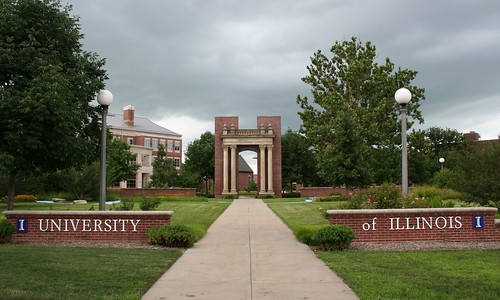
Ironically, most students who seek campus employment do so because of the desire to help fund their education. Yet, talking with two student bloggers, Amelia Possanza (2012) of Swarthmore College, and Yuri Ozeki (2009) from the University of Illinois, working on campus is an integral part of their overall college experience.
On Campus Employment
Amelia Possanza, a freshman at Swarthmore College, found the perfect work opportunity for her at the school’s performing arts center. Having done a great deal of technical theater work for fun in high school, Possanza utilized her prior experiences to secure a regular position at Swarthmore as a scene shop foreman.
The native of Pittsburgh has kept her hours to a minimum in the early going, especially given her involvement in athletics as a member of the swim team. In her first semester, Possanza does two shifts of two hours each week.
As for budgeting her time, Possanza learned in high school that doing school work for hours on end never really got her anywhere. “What works for me,” explains Possanza, “is studying for awhile and then doing some physical activity that allows my mind to mull over the concepts and sub-consciously work stuff out.”

The freshman minoring in Latin American Studies loves the physical nature of working and building sets. “Cutting wood and putting in screws gives me an opportunity to do something with my hands and take a break from mental exertion.”
Possanza also is quick to point out that she has learned a great deal from her work experiences, teachings that she might not otherwise receive in the classroom.
“Technical theater is all about problem solving, especially problem solving for problems that no one has ever encountered before,” she notes. “How can we make this plastic well look real? What can we attach to this metal bar to make it longer?”
“I love it because there is no right answer, only a method to approaching such problems.” As for gaining additional skills, Possanza adds, “I’m obtaining practical skills, such as saw use and drafting, that could help me get a transitional job in the future.”
Yuri Ozeki of the University of Illinois manages to hold down three on-campus jobs simultaneously. The senior works anywhere from 25-30 hours a week with a chunk of that time coming on weekends.
The bulk of Ozeki’s work hours come as a facility manager at the Urbana-Champaign’s Division of Campus Recreation. Her two older sisters worked at the facility when they attended Illinois and encouraged their younger sibling to consider it as well.
My campus recreation job is very flexible,” states the 22-year-old. “I work with other facility managers to create a work schedule that we are all happy with. Typically, I have two morning shifts during the work week, then, I try to pick up two weekend shifts.”
In addition to the 10 or 12 hours she spends each week at her campus recreation employment, the News-editorial journalism major puts in time as a writing intern at the University’s Office of Admissions. Though she has a relatively routine schedule, working four hours each Monday, Wednesday, and Friday, she acknowledges that the office has been very willing to recognize how important her education is to her.
“Some weeks, I have two or three class projects due,” the senior notes, “so I won’t work as much but then the next week, I’ll try to be in for longer shifts three times a week.”
To further her writing skills, Ozeki also took a copy-editing position at the campus newspaper, The Daily Illini. As a freshman, she also served as a reporter for the paper. “I work once a week and attend occasional meetings and training sessions,” she explains.
But while school is definitely her primary responsibility, Ozeki, like Possanza, insists that her work experience is rounding out her college education very nicely.
“My various jobs are really contributing to my education just as my classroom work is, so I see it as time well spent. When I’m working, I don’t necessary see it as ‘working’ or see it as something removed from my purpose of being in college: my education.”
Additional Peer Group
In addition to the overall work experience, each setting provides students another set of individuals to become acquainted with. Possanza acknowledges that her work in the theater does not bring her in contact with many classmates.
“I don’t work with many other students,” explains the Swarthmore freshman. “But the full-time technical theater crew that I work with is full of fairly young people who constantly teach me about new music. They also had very different college experiences than I did.”
“I have also met a few part-time people who are trying to start a career in technical theater, so they take on whatever jobs they can get. It’s so interesting to talk to people who are out in the ‘real world,’ especially since college can be such a bubble.”
For Ozeki, her work at the Daily Illini brings her into contact with fellow journalism majors. She notes, “It’s important to have a support network of people who are going through the same experiences.”
But she also quickly adds that her work at the Office of Admissions and Campus Recreation brings her into contact with people from many different fields. “Working with people who have different perspectives and ideas only help me to widen my skill sets and viewpoints,” she insists.
“At Campus Recreation, there is just a plethora of student employees. I really enjoy working there because it’s just a hub where a great variety of people are able to come together to accomplish the same goal. And our patrons and members are fellow students from every major and minor imaginable.”
Balancing Responsibilities
When it comes to balancing the responsibilities of school and work, both young ladies are clear that work actually helps them handle this task. Both also have schedules that would likely wear down the typical student.
 Possanza of course also has to budget extensive time for swim. “The swim season officially started at the end of September and runs until the end of February,” states the 18-year-old. “We have practice everyday, except Sundays, for two hours. Meets can take longer, especially if they’re away.”
However, the freshman insists her schedule as constructed is very manageable.
“This semester the balance doesn’t seem too difficult because all first semester freshmen at Swarthmore are pass/fail,” adds Possanza. “But in the future I expect that this job will help with the balance.”
Ozeki acknowledges her preponderance of work time might be more than a bit unusual.
“I really just like working,” she says. “I keep piling on new jobs because I just enjoy new environments and working with new people. It sounds weird, but it’s true.”
Still she recognizes the need for budgeting her time accordingly.
“It can be difficult to manage study and work time, but it all comes down to prioritizing your responsibilities,” states Ozeki. “I’ve been fortunate enough to have very understanding employers and co-workers that know that some weeks are worse than others in terms of my work load.”
Getting the Most from College
Many students regard college as a full time commitment. Yet when pressed, those same students acknowledge that there is always time for other activities over the course of each week.
The question always comes down to what we do with those hours. Certainly, spending time socializing with peers is one of the preferred activities, both for its pure enjoyment as well as for taking one’s mind off the stresses associated with papers, prelims, and projects.
 Yet, as Possanza and Ozeki point out, spending a few hours a week working can also provide a great break from the study routine. In addition, that work can provide a wealth of additional learning opportunities as well as an interesting set of new acquaintances.
Given the costs of a college education, students should want to maximize their experience. Working in one of the many on-campus settings is one way to ensure that you get the most you can from your college years.
Flickr photos courtesy of Colin Purrington and almostincognito.
There is little doubt today that internships are a critical aspect of a college student’s preparation for future work opportunities. Not only do internships create a network of future employment options, a well-chosen opportunity will help you apply your knowledge and skills in a real work environment.
 Most often, an internship is considered a trade-off, a swap of your time versus the chance to earn some serious cash. However, in today’s troubled economy, many students are finding that not only have the job opportunities dried up but internships are also exceedingly hard to come by as well.
In tough economic times, you just might need to create your own prospects. Here are six steps to help you secure such an opportunity.
1. Talk to Your Professors: The first step is to let your professors and your advisor know you are looking for an internship. Simply stated, these folks have connections to a multitude of professional people. Not only might they know of a possible option, if these individuals know you well enough they might even lobby a colleague on your behalf. And there is always the chance they themselves might take an intern to help with a specific project or some research. But they cannot help you if they are not aware you are looking for an internship.
2. Talk to Your Parents and Extended Family: Ditto number one. Any working member of the family could have similar connections. More importantly, they could be your strongest lobbying agent for a position. Be aggressive and follow up on all possible leads.
3. Attend a Career Fair:  Take the time to attend a career fair to research companies that you would enjoy working for even if they are not hiring. Talk to the key people and introduce yourself, then get their card. Later, construct a letter of interest to the person you met that first indicates how impressed you were with the company followed up with indications that you would welcome an internship opportunity should anything become available.
4. Consider Community Service: Yet another option is to examine those entities looking strictly for volunteers for some form of community service. Here again, think through the options so that you find a non-profit that would also offer you the chance to use your skills to help perform some additional meaningful opportunities. One student we know volunteered at a food bank. While the majority of the time was spent stocking shelves and doing inventories and paperwork, she was given the chance to use her technology skills to help set up a system to automate some of these tasks. While much of her time at first was unpaid, as time progressed the agency began to pay her for the hours she spent automating the agency’s record keeping.
5. Have a Polished Packet Ready: If you are going to pursue your own option, you must plan ahead and be fully prepared to submit a packet at a moment’s notice. Have your resume up to date and polished – use the campus career center to help you put together a quality product. In addition, have a roughed out cover letter that hits the basics about you but leaves room for you to tailor the letter to the company or person you are applying to. Resist using the same cover letter over and over again – to give the impression that you are totally interested in an opportunity with that company the letter must be unique to that business.
6. Do Mock Interviews:  Lastly, make an appointment at the career office at your school to conduct a mock interview. Try to get written feedback and go back to the dorm to rehearse further before doing yet another mock up. Try to get the second one taped if you can and again solicit written feedback to help you hone your skills. The bottom line, if there are four people interviewing for a possible internship, the one that makes the best impression will likely get the opportunity. A skilled performance can even overcome an average GPA.
Ultimately, in these tough economic times, be aggressive and prepared so as to seize the right opportunity when it presents itself.
Flickr photos courtesy of unforth, yngrich and vlasta2.
The verdict is in!

This past week, the results of a survey from Kaplan Inc. revealed that colleges have begun looking at potential applicants’ social-networking profiles such as Facebook and MySpace during the admissions process. According to Kaplan, 10% of admissions officers are now including a student’s social-networking site profile when making this important decision.
Perhaps even more important to students are two other figures, 38% and 25%, respectively. These are the percentages of profile pages that admission officials indicated ‘negatively affected’ their views of the applicant (38%) as compared to those that ‘positively affected’ their opinions (the 25%).
Profile and Privacy Settings
Given this development, students should give careful consideration as to the information and the photo(s) placed on their profile page. As for interests, it may seem humorous to list ‘wine, women, and song’ while that profile picture of you holding two cans of beer, even if done in jest, may seem harmless. However, face it, such information is not likely to set well with a college admissions officer or a potential employer.
As for your site, there is little doubt today that you should utilize the available privacy settings to ensure that only those you invite have access to the information on your page. This step is as important for your personal safety against online predators of various forms as it is to protect your basic image.
 But in regards to privacy options, students need to realize that group permissions for certain subgroups can expose you to other viewers. Accepting a group en mass might seem relatively innocuous (your elementary school classmates, for example) but such blanket permissions can inadvertently expose students to other site viewers that you might, in retrospect, wish did not have access to that information.
Your Personal Brand
While students should use these privacy settings to limit outside access to personal information, it is important to realize that one of your most important steps in life today is the creation of your online image or brand. Today’s new media along with the capabilities of the Internet require students to think very carefully about the brand they want to cultivate.
And by brand, we mean the basic concept that is generally associated only with businesses. A brand in essence is “a collection of images and ideas” that goes on to “convey the essence of a company, product or service”. However, today it is being applied to you as an individual based on the image you create online.
In essence, every piece of personal information placed online is one step in creating your own personal collection of images and ideas (your brand). And since every piece of information on the Internet is archived or cached, any item you post has the potential to be accessed by others, including employers and college admission folks.
Most importantly, even if you decide to take it down later, it will remain available to the rest of the world on the Internet.
Two Simple Tests
 Therefore, it is imperative that students give very careful consideration to the brand they want to create. While it can sometimes be challenging to determine where the boundaries are in such matters, we have heard of two simple checks that will serve you well, the ‘Mom/Grand Mom’ check and the ‘Front-page’ check.
As silly as it may sound, when getting ready to post something online, ask yourself, what would your mother or grandmother think if they were to see the information? Is this something that would in any way serve to decrease their overall opinion of you? If the answer is yes, think twice about posting that information. Your future boss or that admissions counselor will have an even harsher view than your mother or grandmother.
The front page check likely sounds more sophisticated, it just asks you to consider a different audience. Ask yourself, what would happen if the information posted online were to make its way on to the front page of your local newspaper? Would it be a source of embarrassment or would it enhance your image in the community?
Though privacy settings give most users a certain level of comfort, the fact is that anything posted online will remain online for the indefinite future. Once there, it has the potential to be seen by others. So give very careful thought to everything you post.
To Cultivate Your Personal Brand
Because the material you place online can seriously impact your future opportunities you need to actively cultivate your personal brand. To ensure a positive presence online, give careful consideration to each of the following:
1. The Google Search Process – The first step to ensuring a positive brand is to imagine that someone is about to “Google” you. If they were to do so, what would the Google search engine turn up first?
 If it is your Facebook page, then examine that page carefully to ensure that what people see projects you in a positive light. Think of this page and your profile as being your online portfolio – include pictures of you working, performing, competing and volunteering as well as your resume. Include some written work that would help readers begin to understand who you are and what is important to you.
2. Creating your Own Web or Blog Page – Even better than a Facebook page, Kai Davis, a University of Oregon student and blogger, suggests you should create a separate web page or blog that features you at your best. With all the software options available on the Internet, setting up a page today is extremely easy.
Davis insists that the most important thing to remember “is to ‘own’ a search term in this digital age. Having a blog or a web page with some unique content, essays, discussion, resume, etc., will help position you above other candidates for jobs or internships.”
3. Buying a Domain Name – If you are ready to consider such a page, then you should think about buying a domain name as well. Workforce experts insist that “you should own a domain name that matches (as close as possible) your name.” The process of purchasing your name or one very similar is quite easy and relatively inexpensive. More importantly, it will provide you with your ‘own’ search term exactly as Davis describes.
Your Brand Matters
The bottom line is that the material you post has the potential to seriously impact your future opportunities. It might be during the college application/scholarship process or it could be much later when you turn to the world of work (or it could even come that fateful day you take the plunge and decide to run for political office).
Remember, your online brand does matter – be sure to treat it with the utmost care.
Flickr photos courtesy of Vicky Tgaw, SitMonkeySupreme, Jofus/JoeTheDough and AJC1.
With the convenience that e-mail offers, there may well be times when you want to send a note to your professor. However, your professor is not in your peer group nor is she in debt to your interests.
Three Don’ts
First, remember there is a formal relationship between you as the student and your professor. In jotting a note, address him or her with respect and use their proper title. Also use full words. Those cute little acronyms simply have no place in an interaction between student and professor. And those adolescent nicknames that form the basis of much of your high school correspondence do not gain you any credibility with your professors.
A definite no:
TO: Professor Barowski
FR: deltagammagirl@aol.com
RE: 2Day
 Hey Dr. B,
I can’t remember like 3 of the 5 main points from today’s class. I was running late and forgot my notebook and had to take most of the notes on my ITouch. My BFF’s kept like texting me and stuff so I missed most of the lecture.
TTYL,
Lexi
Don’t ever email a professor asking for notes or handouts – if you are going to miss a class ask a classmate to pick up any relevant materials. And never email your professor to ask about, complain about, or even mention a specific grade on a test or paper.
Another no-no:
TO: Professor Barowski
FR: flipcuppin@msn.com
RE: Need the Notes
Doc,
I’m not going to be in class today. No worries, not sick just need a day off…you know what I’m talkin’ ‘bout ;). But i REALLY NEED the notes before Mondays test, i can’t get lower than 75% or you’ll be seeing me again next semecter.
Peace out,
Kyle
And, do not sign with first name or nickname, use your full name and note the specific class you are taking by adding the title and section after your name (Biology 101, Sect. 2). Watching your tone also means waiting for a response. Don’t expect your professor to respond immediately as he or she may not even have access to the necessary materials to respond. Twenty-four hours is to be expected and forty-eight hours is actually a reasonable turnaround time.
Don’t even consider:
TO: Professor Barowski
FR: futurepresident@comcast.net
RE: Haven’t Heard From You
Richard,
I thought the approach to the lecture yesterday was a bit off. I e-mailed you my thoughts right after class but I guess you must have been “busy” since I haven’t heard from you yet. Meet me 10 minutes before class so I can tell you my views.
Derek
Two Dos
 Before hitting the send button, read your email from beginning to end to look for missed words as well as spelling and grammatical mistakes. When you are satisfied that the note is error free, read your email once again from beginning to end for the tone it conveys – ask yourself if your email denotes an appropriate level of respect.
As part of that deference, remember to always thank your professor when you receive a response. The basic standard is simple, the less powerful person always must write back.
Second, in today’s internet era, email may well be the primary way your professor forms an opinion about you as a person and as a student. Those professors will be the ones that you will one day ask for a recommendation, whether it be for a scholarship, graduate school, or the world of work. Every interaction with them, including the world of email, contributes to the overall impression they have of you. So read that email a third time to be sure it conveys the impression you want to send.
Flickr photo courtesy of factoryjoe and tmbg47.
Often times, during the college application process, the average high school senior gives very little consideration to his or her state university.
For many students, the state school may seem too close to home. For others, it could be that the school is simply too large.
 But most often, for those who have worked so hard to put themselves in the position of being able to go to college, the local university simply does not carry enough prestige.
While this viewpoint is understandable, students should begin the college selection process with a careful look at what their state university has to offer. There are many features to review when considering a school, but there are five great reasons why that review should begin with an in-depth look at your local university.
Higher Admission Rates
If you have put together a solid four years of high school then your chances of being accepted at your local state university are very good. Getting in may seem like a forgone conclusion, but those applying to the elite schools like Harvard, Yale, and Princeton, face some of the lowest acceptance rates going (less than 10% at last check).
However, even schools like Boston College, UCLA and Davidson routinely reject roughly three out of every four applicants. Admission rates trend much higher at state colleges, with in-state candidates generally receiving priority status.
Affordability
State universities represent some of the best educational bargains available. Private college costs today average $33,000 per school year but it is not uncommon to see costs topping $40,000 annually and a few have reached the $50,000 a year plateau.
In contrast, the University of Florida costs in-state students less than $12,000 a year. The University of North Carolina at Chapel Hill, the school heading the Kiplinger top 100 best buys, has a sticker price of a shade under $14,000. With average after-aid costs totaling less than $5,000 per year, students at UNC can attend four years and still put some hard earned dollars aside for the possibility of graduate school.
Diverse Curricula and Program Options
Most experts will tell you, everything academically available at an elite college can be found at many state universities. In fact, the vast majority of state universities offer very strong degree programs and can claim a lengthy history of successful and high-powered graduates.
With almost unlimited major and career options, students attending a state university can still major in business yet minor in a foreign language, study engineering while minoring in communications, even obtain a general liberal arts degree if they see fit. The options are truly endless.
And with that wealth of options available, there is less pressure to have a major set when you begin your studies. At a state university, you can actually change your major and move to a different program within the school, often doing so while still keeping your credits. Transferring out to another school to change majors can be very costly in terms of dollars and time.
Diverse Campus Activities
 The size of the state university means that a wealth of extracurricular options will be available. While most schools will offer some level of sports as well as leadership opportunities, the number of special-interest clubs, newspapers, theater and music options are far greater at state universities. At the University of Georgia alone there are more than 500 student clubs and organizations.
In addition, the state university will by its nature see a very diverse student body, including socio-economic and academic diversity. Though they do hand-pick students, the elite schools try desperately to find ways to ensure some level of diversity on their campuses. At a state college, the less rigorous entrance criteria ensures that social diversity happens naturally.
Proximity to Home
Part of the college experience is the opportunity to get away from home and spread one’s wings. However, there will actually come a time when some of mom’s home cooking will seem like dining out and that old bed in your room will offer a familiar comfort you never knew existed.
Being at your local state school means you have the chance to get home at least for all the major holidays, and if is not too far from home, even for a weekend from time-to-time. In addition, the sheer number of students from across the state guarantee a chance to hitch a ride to within a few miles from home.
Editors note: The list of the best school buys at Kiplinger.com features primarily state universities.
Flickr photo courtesy of bnp.
It is easy to see why so many young people were willing to work for and to cast ballots on behalf of the man about to become our 44th president.
There is soon to be a very different direction for the country as president-elect Barack Obama has already begun the process of conveying a new message to the American public.  Bogged down in two wars and with an economy in peril, the man who began his career by serving the poor in Chicago has already begun establishing a call to service from the people of the richest country on earth.
And many of his options will focus on a direct call to the youth of America.
Victory Speech Lays a Foundation
Obama formally set forth the call to service in his victory speech:
“Above all, I will ask you to join in the work of remaking this nation the only way it’s been done in America for 221 years – block by block, brick by brick, calloused hand by calloused hand.”
“What began 21 months ago in the depths of winter cannot end on this autumn night. This victory alone is not the change we seek – it is only the chance for us to make that change. And that cannot happen if we go back to the way things were.”
“It cannot happen without you, without a new spirit of service, a new spirit of sacrifice. So let us summon a new spirit of patriotism; of service and responsibility where each of us resolves to pitch in and work harder and look after not only ourselves, but each other.”
No Shopping or Disney World Messages Likely
The Obama message contrasted sharply with that of the current administration.  One of the more striking moments in the Bush presidency occurred just two weeks after 9/11 when the Republican urged Americans to go “down to Disney World in Florida.”
And if that were not bizarre enough, in his address to the country in 2006, as our economy was struggling, our president noted “a strong beginning to the holiday shopping season across the country.”
He followed that up with his recipe for offsetting further potential economic doldrums.
“And I encourage you all to go shopping more.”
A Constant Message
Contrary to the words of our current president, the man set to take office in January actually had already begun setting a different tone back in September. At that time, Obama laid out some of his ideas regarding how young people will be able to offer their services.
“This moment is too important for America’s greatest resource–our people–to sit on the sidelines. So as President, I will ask for the active citizenship of Americans of all ages and walks of life.
First, we need to create opportunities to serve. I’ll ask more young people to serve in uniform and expand the size of our military. And I’ll increase AmeriCorps–our network of local, state and national service programs–from 75,000 slots to 250,000.”
College Funds for Service
Obama insists he will seek to have such service performed in those areas of greatest need: a greater number of talented Americans willing to teach; others to work on the development of renewable and efficient energy; and another group still to grow the nation’s Foreign Service and Peace Corps.
 In return, the president-elect has put forth some very noteworthy ideas to provide a meaningful return for that service. For all college students, the prospect of financial support for school looms large.
“We need to integrate service into education. We should help schools develop service programs outside the classroom. And I’ve proposed an annual college-tuition tax credit of $4,000 in exchange for 100 hours of public service.
“You invest in America, and America invests in you–that’s how we’ll make college affordable for every American.”
It’s a new message for sure, one that is all about a spirit of community.
It is also one that will invoke comparisons to John F. Kennedy’s inauguration call, “Ask not what your country can do for you, ask what you can do for your country.”
Flickr photos courtesy of Mr. Wright, PingNews.com, and jmtimages.